
Chin implant surgery, or mentoplasty, is a structural facial plastic procedure designed to enhance an underprojected or recessed chin line. A weak chin disrupts the profile, making the nose appear larger and causing the jawline to blend into the neck without a clear definition. Undergoing chin augmentation in Istanbul, Turkey, with an experienced facial plastic surgeon offers a permanent structural fix. By securing a customized, biocompatible implant directly over the lower jawbone, this procedure defines the jawline, sharpens the neck profile, and creates a balanced, harmonious facial structure.
1. Introduction to Chin Implant Surgery (Mentoplasty)
What is a Chin Implant? Restoring Balance to the Lower Facial Third
Chin implant surgery, or mentoplasty, is a structural facial plastic procedure designed to enhance an underprojected or recessed chin line. A weak chin disrupts the profile, making the nose appear larger and causing the jawline to blend into the neck without a clear definition. Undergoing chin augmentation in Istanbul, Turkey, with an experienced facial plastic surgeon offers a permanent structural fix. By securing a customized, biocompatible implant directly over the lower jawbone, this procedure defines the jawline, sharpens the neck profile, and creates a balanced, harmonious facial structure.
- Profile Projection: Advances a weak or recessed profile to bring the lower third of the face into harmony with the nose and forehead.
- Jawline Definition: Shapes a crisp, distinct border along the jawline, reducing the appearance of a soft neck or double chin.
- Structural Permanence: Utilizes highly stable, medical-grade implants that fuse naturally with the facial structure, providing a lifelong alternative to temporary dermal fillers.
Chin Implants vs. Jaw Fillers: Structural Bone Support vs. Temporary Volumizers
Dermal fillers add soft volume to the skin tissue, but they cannot mimic the sharp definition of a natural bone structure. Large amounts of liquid filler injected into the chin can soften over time, causing a round, puffy appearance. A surgical chin implant sits directly against the lower jawbone (mandible), acting as a solid extension of the skeleton to deliver a clean, crisp jawline that moves naturally during speech and expressions.
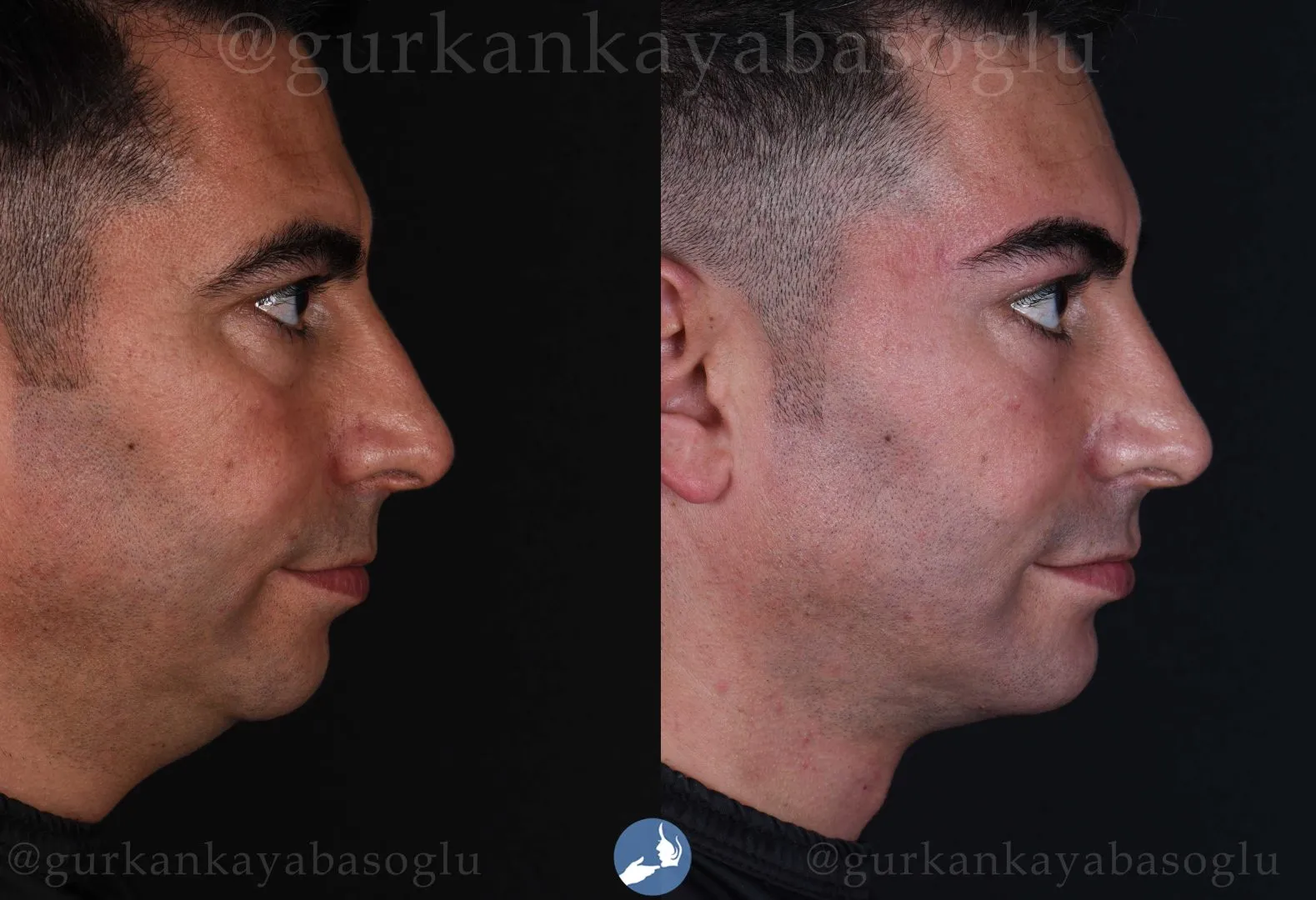 Before & after — Chin Implant (Mentoplasty)
2. The Technical Science of Incision Pathways & Implant Stabilization
Achieving a balanced chin augmentation requires precise implant placement along the lower mandible, ensuring the structure is securely anchored to prevent shifting.
Evaluating Incision Pathways: Intraoral vs. Submental
The implant can be placed through two distinct incision pathways. The intraoral approach places the cut inside the mouth, completely avoiding external scars, though it requires strict oral hygiene during early recovery. The submental approach utilizes a small incision hidden in the natural skin fold right underneath the chin, providing excellent surgical visibility and a very low risk of infection.
Deep-Plane Implant Stabilization
To keep the implant completely stable, the surgeon creates a precise pocket directly beneath the periosteum—the tough, fibrous membrane covering the jawbone. Placing the implant in this deep-plane pocket sits it securely against the bone, preventing movement and ensuring it blends naturally with your facial expressions without affecting the superficial muscle layers.
Technical Comparison Matrix: Intraoral vs. Submental Incision Approaches
| Surgical Parameter | Intraoral Approach (Inside the Mouth) | Submental Approach (Under the Chin) |
|---|---|---|
| Scar Visibility | Completely invisible; hidden entirely inside the lower lip. | Discreetly placed within the natural shadow fold under the chin. |
| Dissection Plane | Passes through the oral lining near the mental nerve exit. | Direct access to the lower mandible border. |
| Infection Risk | Requires strict post-op oral rinses to manage mouth bacteria. | Extremely low; easily kept clean with standard topical care. |
| Early Healing Profile | Temporary swelling of the lower lip; mild diet restrictions. | Mild localized swelling; allows a normal diet right away. |
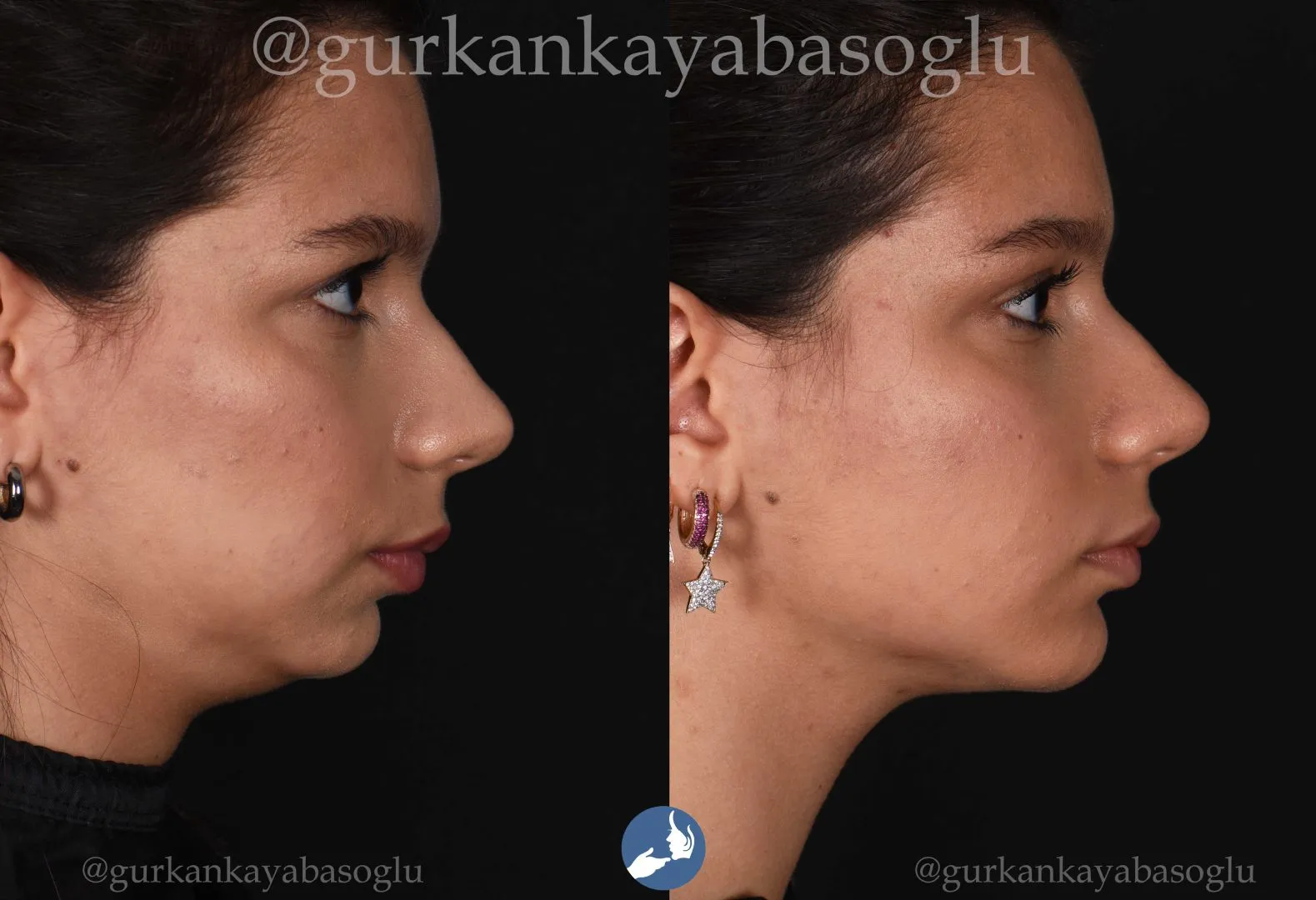 Before & after — Chin Implant (Mentoplasty)
3. Structural Scaling: Profileplasty & Mental Nerve Protection
A chin implant balances the lower face by focusing on two main structural goals: achieving overall profile harmony (profileplasty) and protecting the sensory nerve pathways of the lower lip.
Profileplasty: Calibrating the Nose-to-Chin Relationship
Profileplasty evaluates how the nose, lips, and chin look in relation to one another from the side. In many cases, a patient may feel their nose looks too large when the real issue is an underprojected chin that throws off the facial balance. By advancing the chin position with a customized implant, the surgeon restores a natural profile line, instantly making the nose look more proportional and sharpening the transition where the neck meets the jawline.
Preserving the Mental Nerve Pathways
The lower jaw features two critical sensory pathways called the mental nerves, which exit the bone just below the corners of the mouth to provide feeling to the lower lip and chin. To prevent permanent numbness, the surgeon maps the implant pocket carefully to sit clear of these nerve exits. This specialized care ensures that any early post-op tightness or tingling is temporary, allowing normal feeling to return completely during early recovery.
- Tension-Free Muscle Placement: The implant is placed completely beneath the mentalis muscle, ensuring it stays firmly in place without putting pressure on the overlying skin or altering your natural smile.
- Anatomical Customization: The implant shape is contoured during surgery to match the natural curves of your jawbone, preventing sharp edges or gaps.
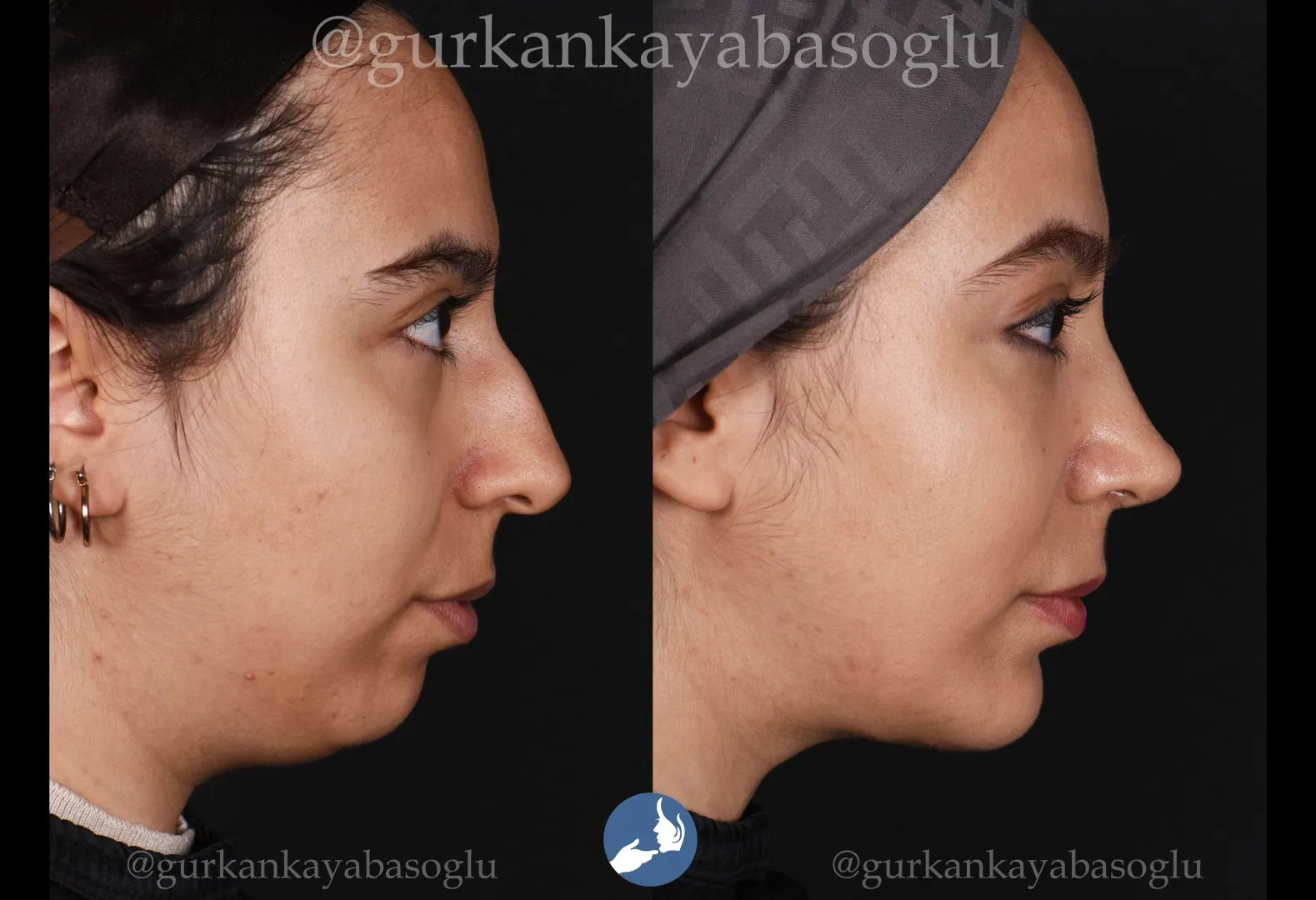 Before & after — Chin Implant (Mentoplasty)
4. Preventing Complications: Avoiding Displacement & Tissue Harmony
The lower jaw handles significant movement from talking and chewing, which requires exact implant stabilization to ensure a smooth recovery and permanent results.
Preventing Implant Displacement and Asymmetry
If a chin implant is placed loosely or in too large a pocket, the daily movement of the chin muscles can cause it to shift out of alignment. To prevent this, the surgeon creates a precise pocket that matches the exact dimensions of the implant. The implant is then securely anchored directly to the tough bone lining (periosteum) using permanent micro-sutures or specialized fixation screws, keeping it perfectly centered and stable.
Choosing Biocompatible Materials for Long-Term Tissue Harmony
We utilize premium, medical-grade solid silicone or porous polyethylene (Medpor) implants. These materials are highly biocompatible and have been used safely in facial plastic surgery for decades. They resist breaking down, do not cause allergic reactions, and adapt naturally to the surrounding tissues, ensuring a stable foundation that remains comfortable for life.
Implant Projection Levels and Anatomical Target Matrix
| Protrusion Deficit Level | Planned Implant Thickness | Anatomical Focus & Adjustment Goal |
|---|---|---|
| Mild Underprojection (1 mm to 3 mm recess) | Small / Anatomical Contour | Gently sharpens the central chin point to provide a distinct jaw border without altering the lateral width of the jawline. |
| Moderate to Severe Recess (4 mm to 7 mm+ recess) | Medium to Large / Extended Anatomical | Features extended sides that blend smoothly along the jawline, filling out deep side dips and delivering strong, masculine or feminine definition. |
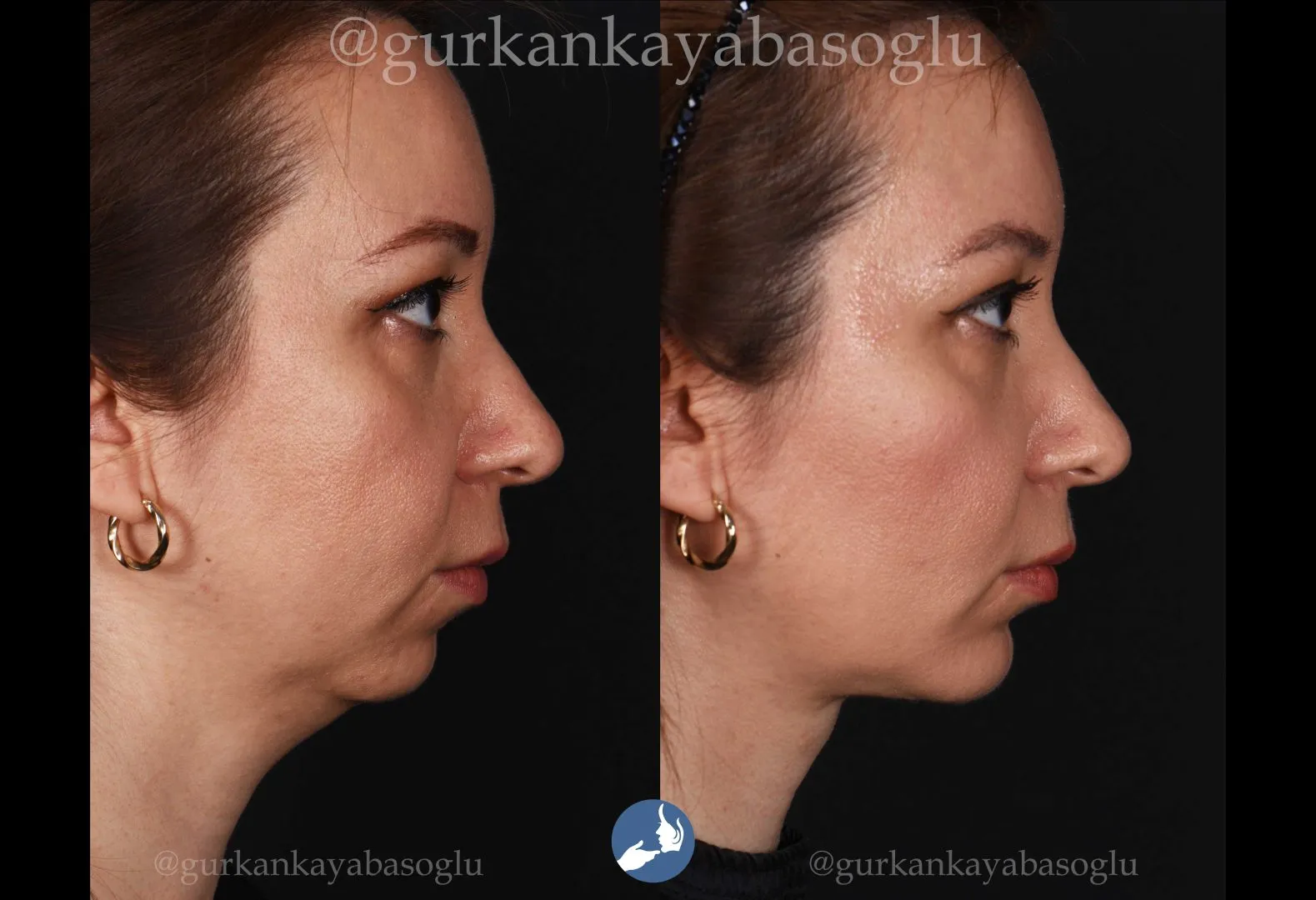 Before & after — Chin Implant (Mentoplasty)
5. The Surgical Journey with Prof. Dr. Gürkan Kayabaşoğlu
Enhancing the lower jaw requires an exact calculation of facial angles and bone structure. In our Istanbul clinic, we measure and shape every chin implant to match the patient’s natural anatomy, ensuring a defined jawline that balances perfectly with the nose and forehead.
The Chin Implant Clinical Workflow Steps
- Pre-Operative Profile Markings: While the patient is upright, the surgeon marks the central chin midline and evaluates the profile line. This step involves calculating the exact implant thickness needed to restore balance between the nose and jaw.
- Precise Deep-Plane Placement: Performed comfortably under local anesthesia with sedation or general anesthesia. After creating a clean incision through the chosen submental or intraoral path, the surgeon lifts the periosteum membrane to create a precise pocket directly against the jawbone.
- Secure Foundation Anchoring: The customized implant is centered and secured to the bone frame using specialized sutures or micro-screws, preventing any shifting before the deep tissue and skin layers are closed with fine stitches.
Why Facial Plastic Specialization Controls Lower Jaw Harmony
Placing a chin implant is not just about adding volume; it requires a deep understanding of nerve pathways and muscle dynamics. If the implant pocket is poorly made, it can cause asymmetry or press against vital nerves. Professor Dr. Gürkan Kayabaşoğlu’s specialized focus on facial plastic surgery ensures the implant sits securely in a deep plane, keeping your expressions natural and your smile perfectly balanced.
| Surgical Specialization Skill | Targeted Application in Chin Augmentation |
|---|---|
| Mentalis Muscle Management | Placing the implant completely beneath the muscle layer to ensure your chin moves naturally during speech and eating. |
| Periosteal Pocket Customization | Creating a tight, precise pocket directly against the mandible bone to prevent the implant from shifting over time. |
| Lateral Edge Blending | Tapering the outer wings of the implant smoothly into the jawline to avoid any visible or sharp edges along the bone. |
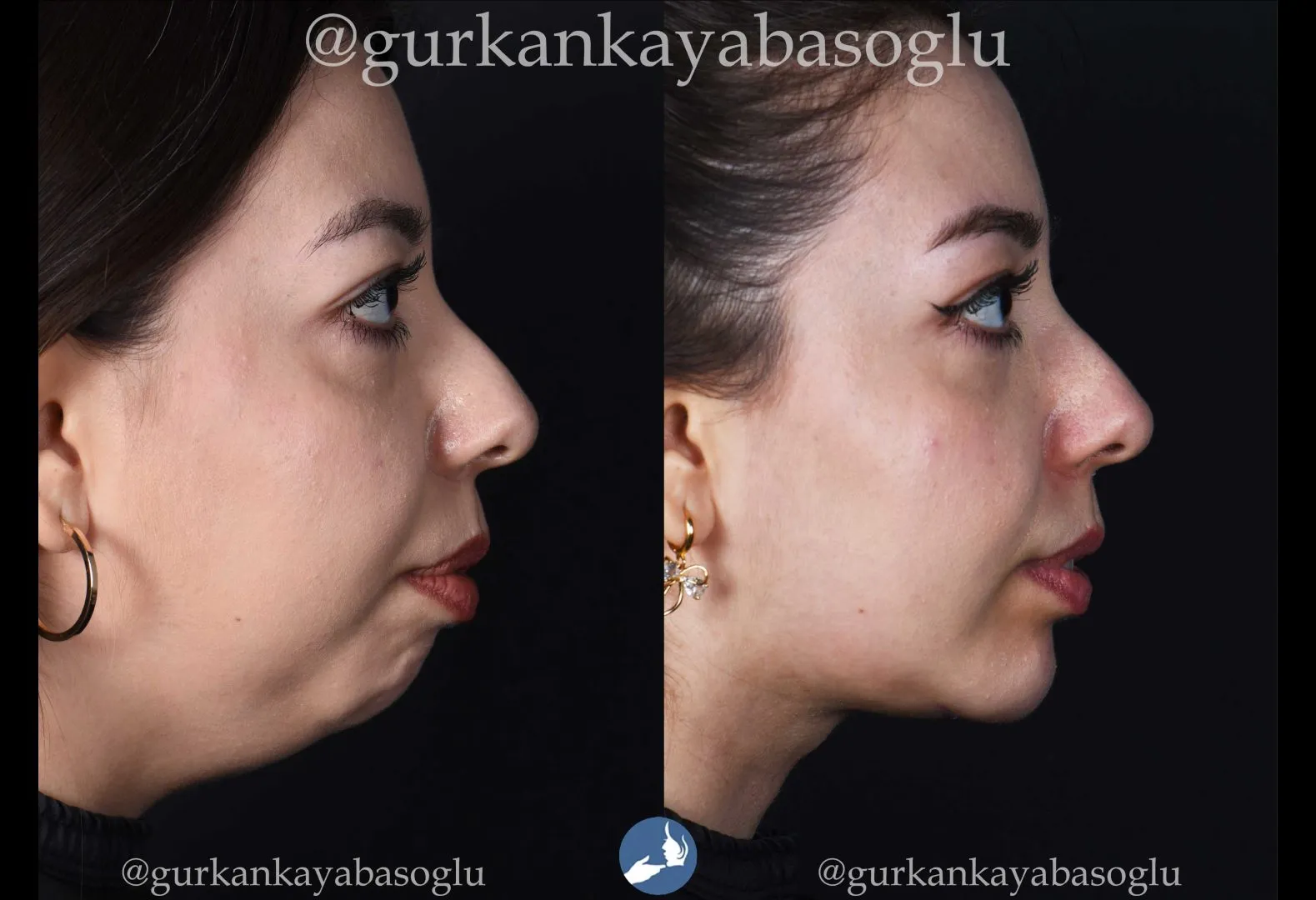 Before & after — Chin Implant (Mentoplasty)
6. Chin Implant Recovery Dynamics & Safe Healing Timeline
Because the implant is placed securely against the bone beneath the muscle layers, early recovery focuses on managing swelling and keeping the incision site clean to support smooth tissue healing.
Milestone Recovery Timeline
| Timeframe | Anatomical Healing Behavior | Clinical Care Priorities |
|---|---|---|
| Days 1 - 3 | The chin and lower lip will feel tight and swollen. Mild numbness or tingling around the lower lip is common and temporary. | Apply cold compresses to the area. Stick to a soft diet (smoothies, purees, soups). Use prescribed antiseptic mouthwash if an intraoral path was used. |
| Days 5 - 7 | Initial tightness begins to ease, and major swelling subsides. The external submental sutures achieve clean surface bonding. | Visit the clinic to have external sutures or surgical tapes comfortably checked and removed. The new jaw definition becomes clearly visible. |
| Weeks 2 - 3 | Normal speaking patterns and facial expressions return as the chin muscles adapt to the implant. Mild residual swelling remains. | You can gradually resume a normal diet. Avoid hard or extremely crunchy foods that require intense chewing force. Light activities can be restarted. |
| Weeks 4 - 6 | The implant becomes fully integrated as the surrounding tissues heal securely around it. Lower lip sensation returns to normal. | Resume regular exercise routines. The final, sharp definition of the jawline and improved profile balance are fully stabilized. |
| Months 3 - 6 | All subtle micro-swelling fades completely. External submental scars soften into faint, pale lines hidden in the natural shadow under the chin. | Enjoy the permanent results. Your enhanced chin line requires no long-term maintenance and moves naturally with your face. |
Post-Operative Care Protocols for Smooth Jawline Healing
Dos:
- Maintain excellent oral hygiene by rinsing with the prescribed antiseptic solution after every meal if your incision is inside the mouth.
- Sleep on your back with your head elevated on pillows for the first week to help gravity reduce lower face swelling.
- Keep the supportive surgical tape or chin strap intact as directed by your clinic team to minimize fluid buildup.
Don’ts:
- Do not eat foods that require heavy or aggressive chewing (like tough meats or hard candies) during the first 10 days.
- Do not apply pressure, massage, or pull down on your lower lip to check the incision, as this can strain the healing tissues.
- Do not expose the chin area to direct impacts, contact sports, or heavy facial manipulation for at least 6 weeks post-surgery.
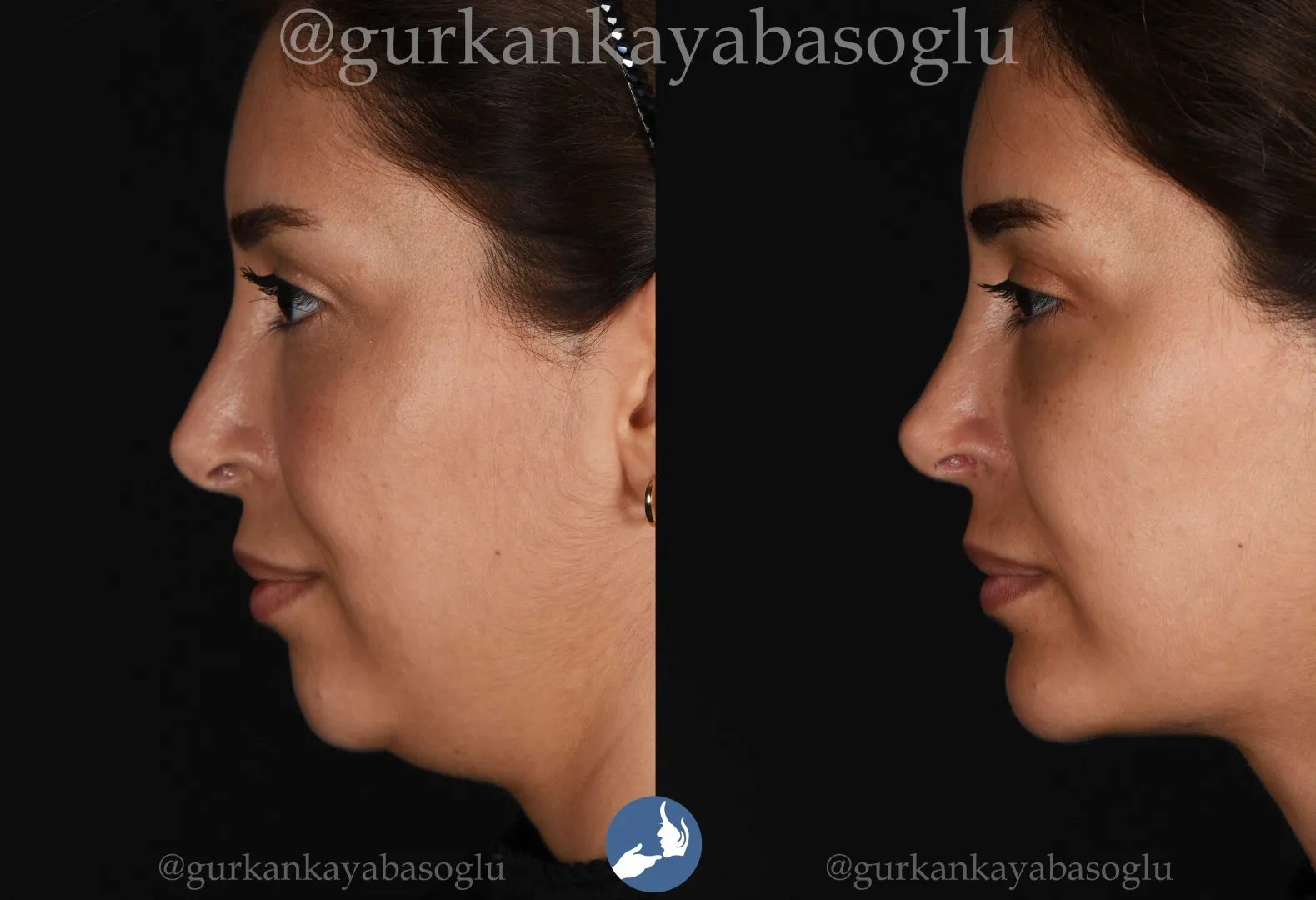 Before & after — Chin Implant (Mentoplasty)
7. Cost & Logistics Analysis: Istanbul, Turkey
A surgical chin implant requires high-quality, biocompatible medical materials and an accredited clinical environment to guarantee maximum patient safety. While the individual jaw shape and chosen incision path determine the precise technical design, undergoing chin augmentation in Istanbul, Turkey, offers top-tier facial plastic expertise alongside exceptionally coordinated, all-inclusive pricing structures.
Factors Influencing Chin Augmentation Pricing
- Combined Profile Procedures: Incorporating a chin implant alongside a rhinoplasty (profileplasty) or submental liposuction to sharpen the neck line alters total operating theater resource needs.
- Implant Material Selection: Utilizing premium solid silicone or customized porous polyethylene (Medpor) shapes the base material costs of the operation.
- Fixation Method: Securing the implant with specialized permanent micro-screws to prevent any long-term movement involves extra high-precision tools and impacts final facility fees.
Procedure Variants & Price Guide
| Procedure Variant | Estimated Price Range (Istanbul) |
|---|---|
| Chin implant | €3,000 – €5,050 |
| Jawline implant | €4,300 – €6,600 |
| Chin reduction (surgical) | €4,000 – €5,750 |
| Double chin / submentoplasty | €4,200 – €5,750 |
Global Price Comparison Grid
| Country / Region | Estimated Average Cost Range | Logistical Package Benefits |
|---|---|---|
| Istanbul, Turkey | €3,000 – €6,600 | All-inclusive care: Premium biocompatible implant, expert surgeon fees, accredited hospital use, luxury hotel stay, and all private airport-clinic transfers. |
| United States (USA) | €10,500 – €23,100 | Surgeon fees are usually quoted alone; implant materials, anesthesia, and routine follow-up clinical visits frequently generate extra bills. |
| United Kingdom (UK) | €9,000 – €19,800 | High private medical facility overheads lead to high baseline rates for open jawline adjustments. |
| Canada | €8,400 – €18,500 | Cosmetic facial surgery is outside public health coverage; surgeon, operating facility and anaesthesia are billed separately, and travel or accommodation is never part of the quote. |
| Australia | €9,600 – €21,100 | Medicare does not fund cosmetic indications; high theatre and anaesthetist charges sit on top of the surgeon’s quote, with no transfer or accommodation support. |
Travel and Healing Logistics for International Patients
Because a chin implant involves fine tissue healing and requires muscle adaptation during early chewing and speaking movements, ensuring primary stability before flying home is essential. International patients should schedule a stay of 6 to 7 days in Istanbul. This window allows the early lower lip swelling to resolve comfortably, enables direct evaluation of your initial healing, and ensures all fine external submental sutures are safely checked and removed at the clinic before your flight back.
8. Prof. Dr. Gürkan Kayabaşoğlu’s Chin Implant Philosophy
A successful chin augmentation should never result in an over-projected, “witch-like” point, an overly blocky masculine jaw on a delicate face, or an asymmetrical shift during speech. Rejuvenating the lower facial third requires a deep respect for individual expression and bone architecture, ensuring the jawline looks crisp and natural from every angle.
The Pillars of Our Chin Augmentation Approach
- Deep-Plane Stabilization Over Surface Placement: Placing an implant loosely under the skin leads to shifting and unnatural movement. Our approach focuses on deep sub-periosteal placement, securing the implant directly against the jawbone framework. This protects the superficial muscles and allows the implant to move naturally with your expressions.
- Comprehensive Profile Harmony (Profileplasty): We do not look at the chin in isolation. The lower jaw must balance seamlessly with the nose, lips, and neck angle. By analyzing these relationships during the pre-op phase, we select an implant size that balances your entire profile naturally.
- Anatomical Edge Blending: To avoid sharp, visible ridges on the sides of the jaw, we utilize anatomical extended implants whose wings taper smoothly into the natural curves of your mandible, delivering clean, continuous definition.
Chin Augmentation Surgical Application Matrix
| Structural Goal | Anatomical Challenge | Dr. Kayabaşoğlu’s Structural Solution |
|---|---|---|
| Balanced Profile Projection | An underprojected, weak chin that makes the nose look overly prominent and softens the profile. | Precise deep-plane placement of a customized anatomical implant to restore natural nose-to-chin proportions. |
| Crisp Jawline Definition | A receding lower jaw frame that blends into the neck, creating the illusion of a double chin. | Utilizing extended jaw implants that fill out side dips and create a sharp, distinct boundary between the jaw and neck. |
| Natural Expression Fluidity | Risk of a frozen smile or artificial stiffness during speech or chewing. | Placing the structure completely beneath the mentalis muscle layers, keeping your authentic dynamic expressions untouched. |
9. Frequently Asked Questions (FAQ Matrix)
This comprehensive question-and-answer framework clarifies the anatomical, technical, and recovery details of advanced chin implant procedures.
Will the surgical scar from my chin implant be visible?
If the submental approach is used, the small incision is placed discreetly within the natural shadow fold right underneath your chin, making it virtually invisible during normal head positions. If the intraoral approach is chosen, the cut is made completely inside the mouth behind the lower lip, leaving zero external marks.
Can the chin implant shift, move, or slide out of place over time?
Not when placed with correct deep-plane techniques. Shifting only happens if an implant is left loose in a large pocket. We prevent this by positioning the implant beneath the tough bone membrane (periosteum) and securing it directly to the jawbone frame with permanent micro-sutures or screws, ensuring it stays perfectly centered for life.
Are chin implants permanent, and how do they compare to jaw fillers?
Yes, surgical chin implants are permanent and made from highly stable, biocompatible materials that do not dissolve or break down. While jaw fillers are temporary, require costly routine touch-ups, and can look puffy in large volumes, an implant acts as a solid extension of your bone structure to deliver clean, crisp definition.
Will a chin implant affect my natural smile or how I speak?
No, provided the implant is placed in the correct anatomical plane. By positioning the structure completely underneath the mentalis muscle layers rather than cutting through them, the muscle moves freely over the implant. Any mild stiffness or tightness in the lower lip during the first two weeks is temporary and resolves completely.
How long after the surgery can I chew normally and return to exercises?
You should maintain a soft food diet for the first 5 to 7 days to protect the deep tissue layers. Normal chewing can be gradually resumed as tightness fades. You can return to light cardio after 3 weeks, but contact sports or activities that risk a direct blow to the jaw must be completely avoided for at least 6 to 8 weeks.
What is the risk of nerve damage or permanent numbness in the lower lip?
The risk of permanent nerve changes is exceptionally low with an experienced facial plastic specialist. The mental nerves exit the jawbone safely away from the central chin line. By carefully mapping the pocket and staying clear of these lateral nerve exits, the surgeon ensures that early post-op tingling or numbness is temporary.