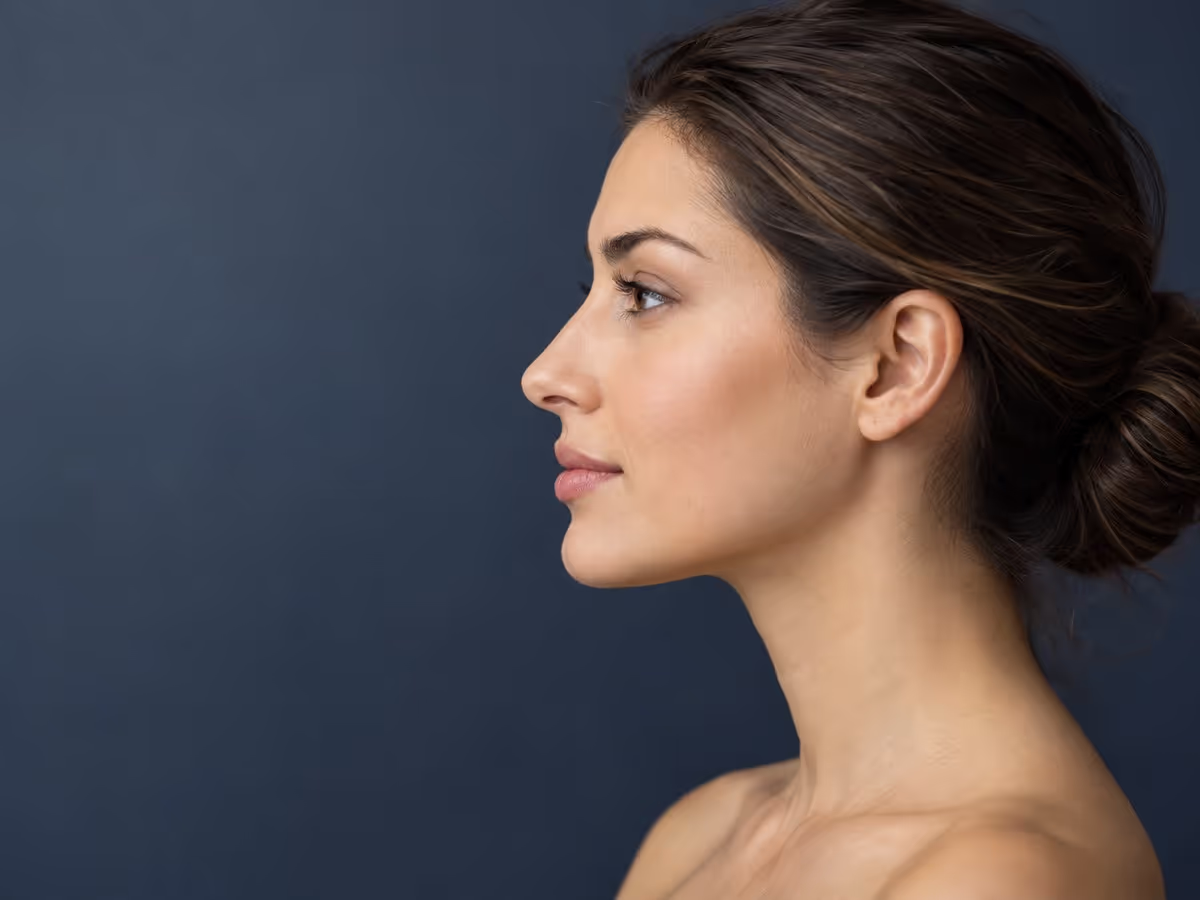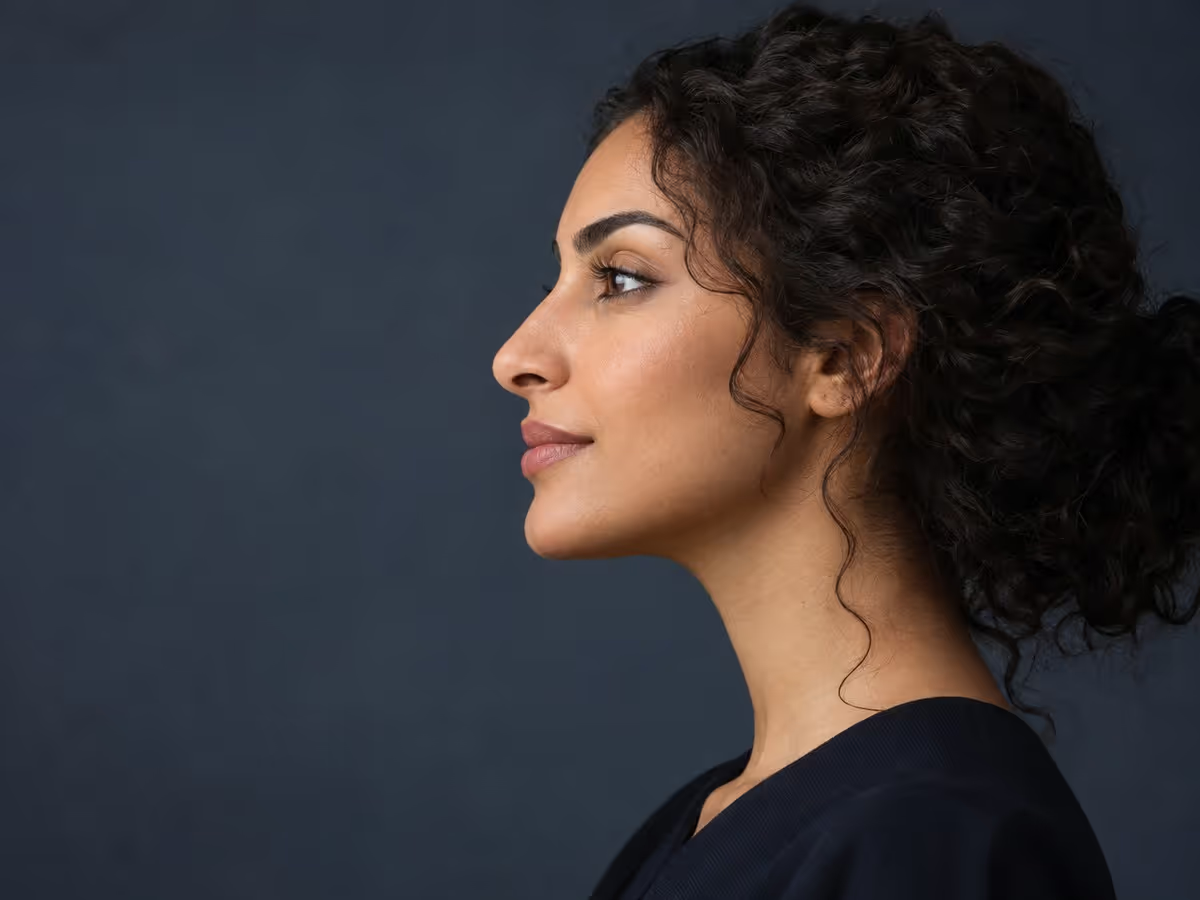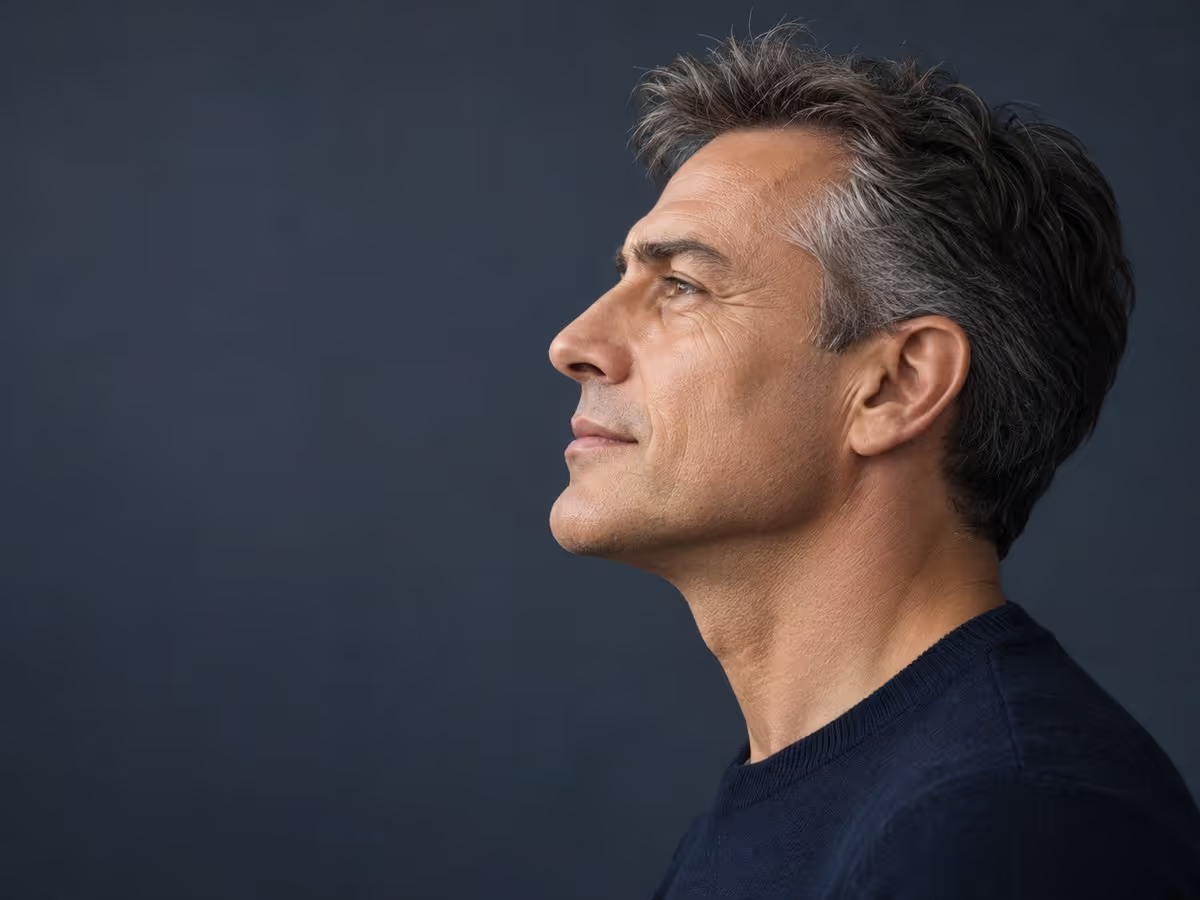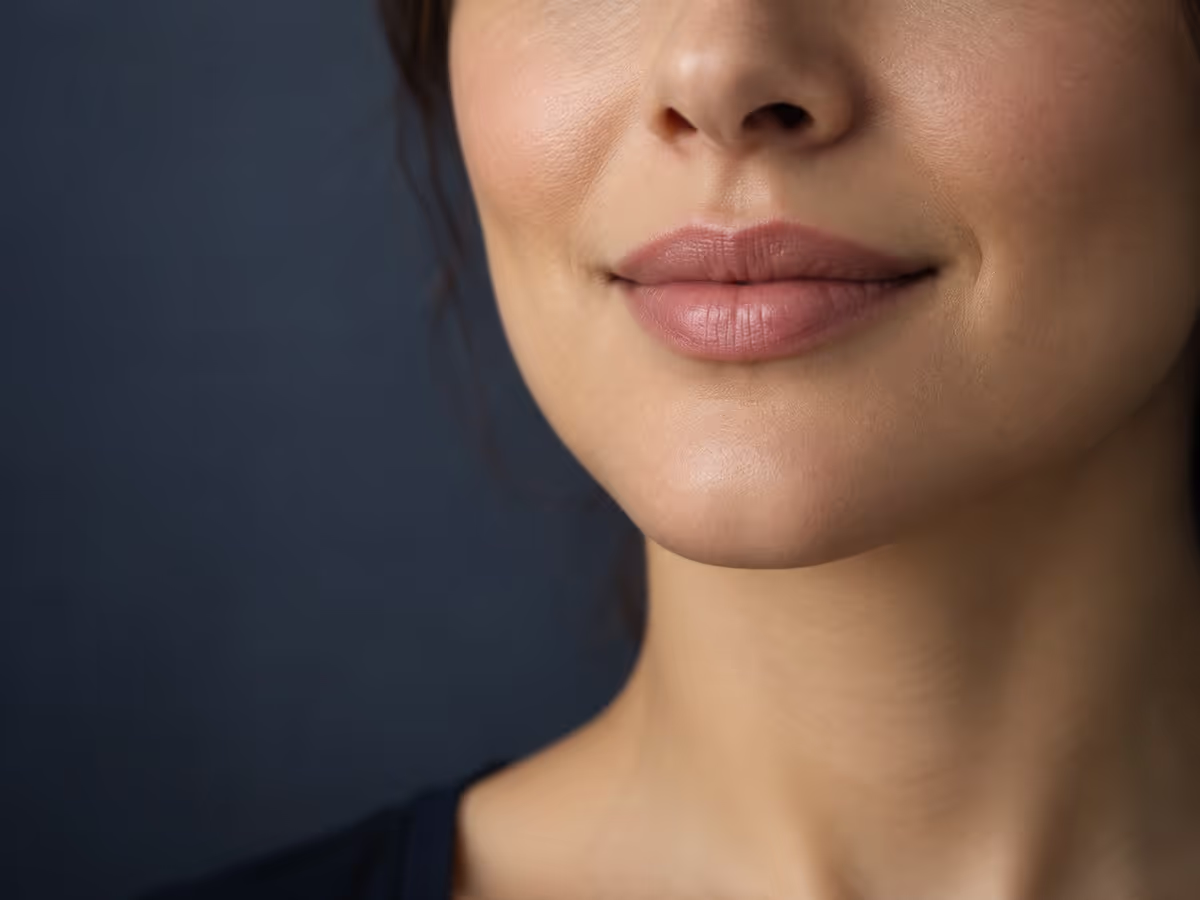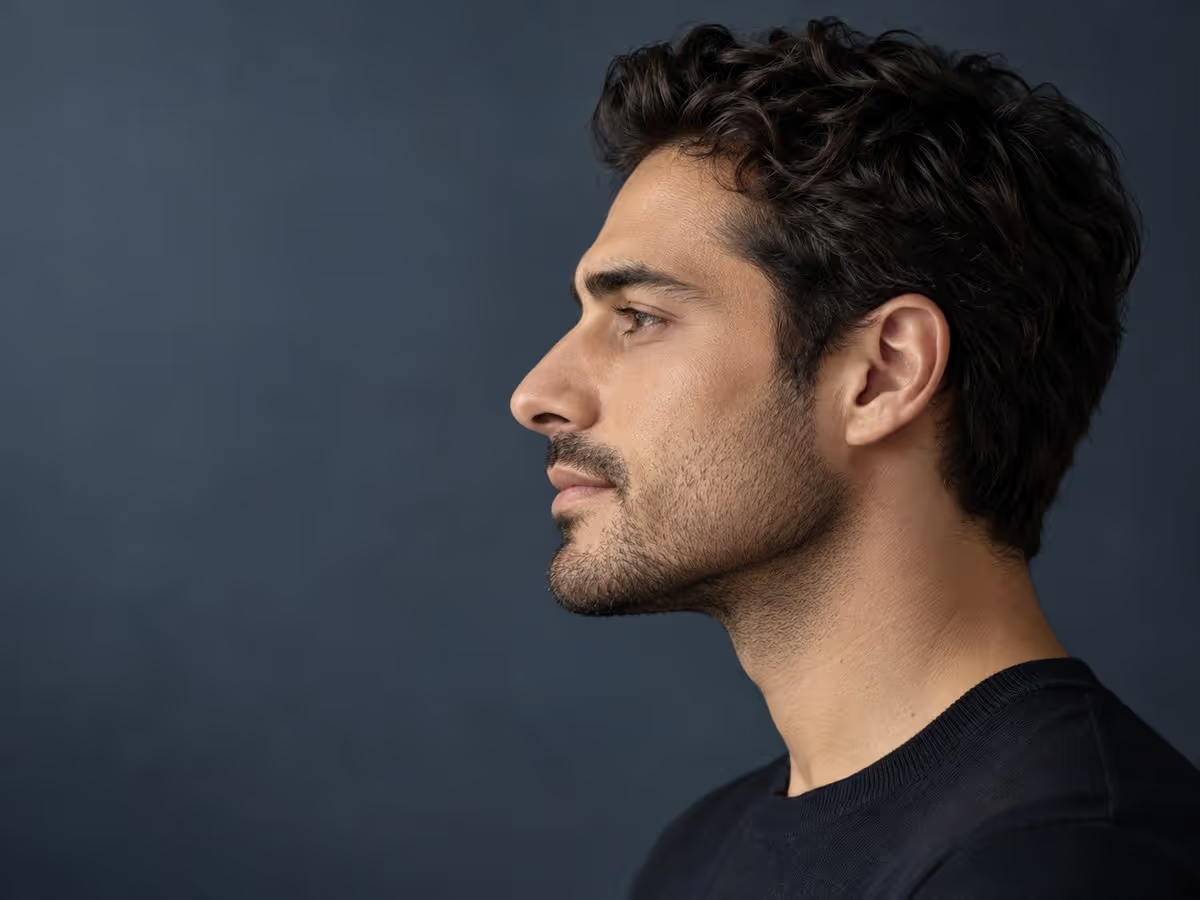
Mid facelift surgery, often performed using advanced endoscopic methods, is a specialized surgical procedure designed to correct structural aging in the central third of the face. As time passes, the malar fat pad of the cheek gradually slides downward under the influence of gravity, leading to hollow eyes, a lengthened lower eyelid junction, and deep nasolabial folds around the mouth. Undergoing a mid facelift in Istanbul, Turkey, with an experienced facial plastic surgeon allows you to lift these dropped cheek structures vertically back over the cheekbones. By operating through small, well-hidden incisions within the hairline and mouth, this technique restores a youthful, natural mid-face contour and full cheek profile without creating visible scars in front of the ear.
1. Introduction to Mid Facelift Surgery
What is a Mid Facelift? Targeting the Center of Facial Aging
A mid facelift focuses specifically on the triangular area between the lower eyelids, the cheekbones, and the corners of the mouth. Traditional facelifts primarily pull the lower jawline and neck tissue sideways, which does not adequately correct a flattened or dropped mid-face. A mid facelift addresses the central structural breakdown directly at its anatomical source by lifting the heavy cheek tissues vertically upward, reversing the exact downward path that aging follows.
- Targeted Elevation: Re-centering the displaced fat pads to naturally round out flat or hollow cheeks.
- Hidden Incision Approach: Performing structural changes through small access entry points, completely avoiding the pre-auricular (in front of the ear) incisions used in full facelifts.
- Eyelid-Cheek Harmonization: Smoothing the long, tired-looking gap that forms between the lower eyelid and the upper cheek line.
The Endoscopic Revolution: Rejuvenation Without Pre-Auricular Scars
The integration of high-definition surgical cameras—known as endoscopes—has revolutionized mid-face rejuvenation. Instead of making long skin cuts to see the underlying framework, the surgeon inserts a tiny camera through small slits hidden entirely inside the hair of the temples. The camera projects a clear, magnified view of the deep tissue layers onto a screen, allowing the surgeon to release and lift the deep facial structures safely, accurately, and with minimal surface disruption.
2. The Technical Science of Subperiosteal Dissection
Achieving a safe, natural, and long-lasting lift in the center of the face requires working within a deep, specialized tissue plane directly above the facial bones.
Working Beneath the Periosteum
The safest and most effective way to lift the mid-face is through a subperiosteal dissection. The periosteum is the tough, fibrous membrane that tightly covers the surface of the facial bones. By entering beneath this thick layer, the surgeon can lift the entire cheek tissue block—including the muscles, fat compartments, and skin—safely away from the bone as a single unit. Because the major facial nerves sit safely above this membrane, working beneath it minimizes the risk of nerve irritation while providing a firm layer to secure a lasting structural lift.
Technical Comparison Matrix: Full Facelift vs. Mid Facelift
| Surgical Parameter | Traditional Full Facelift | Endoscopic Mid Facelift |
|---|---|---|
| Primary Anatomical Focus | Lower face, sagged jowls along the jawline, and loose neck tissue profiles. | Cheek volume depletion, lower eyelid hollowing, and early nasolabial lines. |
| Incision Paths & Visibility | Extended lines looping around the front and back of the ear cartilage. | Small incisions hidden completely inside the temple hair and under the upper lip. |
| Lifting Vector Direction | Lateral and oblique (sideways and upward) to tighten the jaw contour. | Strictly vertical (straight up) to oppose the downward pull of gravity. |
| Deep Dissection Plane | Sub-SMAS or Deep Plane layers within the mobile soft tissues. | Subperiosteal plane directly along the structural surface of the bone. |
3. Anatomical Safety & Visual Precision via Endoscopy
Operating inside the central structures of the face requires exceptional visual clarity. Using advanced high-definition cameras allows the surgeon to perform deep structural alterations safely through minimal access points.
The Role of High-Definition Cameras in Deep Tissue Visualization
The endoscope acts as the surgeon’s eyes inside the deep tissue spaces. By transmitting a highly magnified, clear image of the subperiosteal window onto an external monitor, the surgeon can clearly distinguish between different tissue boundaries, blood vessels, and nerve pathways. This high level of visibility removes the need for large exploratory incisions and ensures the lifting process is performed with extreme precision.
Nerve Protection Protocols and Vertical Vector Orientation
| Anatomical Structure | Surgical Preservation Protocol |
|---|---|
| Infraorbital Nerve Complex | This vital sensory nerve exits the cheekbone directly below the eye, providing feeling to the cheek and upper lip. The endoscope allows the surgeon to see and carefully isolate this nerve, ensuring the cheek tissue is freed without causing irritation or long-term numbness. |
| Zygomaticofacial Pathways | Small sensory branches exit through tiny openings in the cheekbone. Operating precisely in the subperiosteal plane protects these pathways, encouraging a smoother sensory recovery after surgery. |
| True Vertical Lifting Vectors | Aging pulls the cheeks straight down toward the mouth. By using a strictly vertical vector through the temple incisions, the fallen tissue block is lifted straight back up, restoring natural fullness to the cheekbones without widening the face horizontally. |
4. Surgical Transformations: Correcting the Lower Eyelid Transition
Mid-face sagging directly impacts the appearance of the lower eyes, creating a tired look that topical treatments cannot fix.
Smoothing the Tear Trough and Mid-Cheek Junction
In a youthful face, the transition from the lower eyelid to the cheek is smooth and continuous. As the cheek fat pad slides downward, it exposes the lower rim of the eye socket, creating a hollow groove known as a tear trough deformity. A mid facelift addresses this by lifting the fallen cheek mass back up to cover the exposed bone rim. This flattens the tear trough and smooths the eyelid-cheek junction, making the eyes look naturally refreshed.
Addressing Early Nasolabial Folds from the Top Down
The deep lines that run from the nose down to the corners of the mouth—nasolabial folds—are largely caused by heavy cheek tissues sagging against the fixed skin around the lips. Instead of overfilling these lines with temporary dermal fillers, a mid facelift lifts the sagging cheek mass upward away from the mouth. This softens the nasolabial folds from above, restoring a natural contour without changing your expressions.
Mid Facelift Indication Matrix
| Patient Profile | Anatomical Presentation | Target Surgical Benefit |
|---|---|---|
| Early to Moderate Central Aging (Ages 35-50) | Hollowness under the eyes, flattening of the cheeks, lengthening of the lower eyelid area, but with a clean, well-defined jawline. | Isolated endoscopic mid facelift to restore cheek fullness and smooth the lower eyes with zero visible scars around the ear. |
| Advanced Multi-Level Aging (Ages 50+) | Flattened mid-face and hollow eyes combined with heavy jowls along the jaw and loose skin on the neck. | A combined approach combining an endoscopic mid facelift with a deep plane facelift or neck lift for complete, balanced rejuvenation. |
5. The Surgical Journey with Prof. Dr. Gürkan Kayabaşoğlu
Performing an endoscopic mid facelift demands a high level of technical precision and specialized handling of microscopic camera equipment. In our Istanbul clinic, we plan every mid-face lift to align perfectly with the patient’s individual bone structure, balancing long-term tissue support with full facial safety.
The Mid Facelift Clinical Workflow Steps
- Pre-Operative Structural Mapping: A detailed assessment of the lower eyelid anatomy, malar fat pad descent, and cheekbone symmetry. The small entry points are carefully mapped inside the temple hair and under the upper lip, completely out of sight.
- Endoscopic Entry & Subperiosteal Release: Performed under general anesthesia. The surgeon inserts the high-definition endoscope through the temple incision, safely enters the subperiosteal plane directly against the bone, and releases the rigid ligaments holding the flattened cheek tissue down.
- Vertical Fixation & Anchorage: Once completely freed from its aged constraints, the entire cheek tissue block is lifted vertically. The tissue is anchored securely to the strong, deep temporal fascia using advanced micro-sutures or specialized bio-absorbable fixation devices (such as Endotines) to hold the new shape during healing.
Why Facial Plastic Surgery Specialization Changes the Outcome
Lifting tissues in the center of the face requires a delicate balance; over-correcting can lead to a distorted or widened look, while under-correcting provides little benefit. Professor Dr. Gürkan Kayabaşoğlu’s advanced expertise in facial plastic surgery ensures the mid-face block is lifted along a natural vector, achieving a refreshed look that moves normally when you smile.
| Surgical Specialization Skill | Targeted Application in Mid Facelift Surgery |
|---|---|
| High-Definition Endoscopic Control | Navigating through tiny incisions with maximum magnification, ensuring the vital infraorbital nerves remain entirely undisturbed. |
| Deep Periosteal Anchorage | Securing the heavy cheek muscles directly to the bone framework rather than pulling the skin, preventing artificial stiffness. |
| Vertical Vector Balancing | Lifting the tissues straight upward to restore youthful cheek roundness while avoiding any unnatural horizontal stretching. |
6. Mid Facelift Recovery Dynamics & Timeline
Because an endoscopic mid facelift keeps the surface skin completely intact and shifts the entire tissue mass deeply along the bone layer, healing follows a distinct path. Surface skin scarring is non-existent around the ears, though temporary internal tightness around the temples and cheeks is a normal part of the deep restructuring process.
Milestone Recovery Timeline
| Timeframe | Anatomical Healing Behavior | Clinical Care Priorities |
|---|---|---|
| Days 1 - 3 | Swelling peaks around the cheeks and lower eyes. A feeling of internal tightness is felt in the temples due to vertical anchoring. | Apply cold compresses gently over the eyes. Rest with your head highly elevated and stick to soft, cool foods to protect the intraoral incisions. |
| Days 7 - 9 | Cheek swelling begins to soften and move downward. The hidden incisions inside the hairline initiate secure primary closure. | Visit the clinic to check the temple entry sites and remove fine surgical sutures or staples from the hair-bearing areas. |
| Days 10 - 14 | The majority of acute mid-face swelling subsides, revealing a refreshed cheek contour. Intraoral stitches dissolve on their own. | Normal social interactions can be resumed. Light makeup can be used to cover any lingering faint bruising under the eyes. |
| Weeks 3 - 4 | The anchored tissue block settles securely into its elevated position. Temporary temple tightness continues to diminish. | Gradually resume light physical exercises like walking. Avoid forceful facial expressions or sleeping face down. |
| Months 3 - 6 | Deep tissues bond completely to the underlying bone framework. Minor internal firmness resolves entirely. | Enjoy the final structural roundness of the cheeks and a smooth under-eye area. Maintain routine sun protection over the temples. |
Post-Operative Care Protocols for Hidden Incision Protection
Dos:
- Rinse your mouth gently with the prescribed antiseptic solution after every meal to keep the internal upper lip incisions perfectly clean.
- Keep your head elevated using two or three firm pillows for the first three weeks to speed up fluid drainage from around the eyes.
- Brush your hair with extreme care near the temples, using a soft-bristled brush to avoid catching the healing incision sites.
Don’ts:
- Do not consume hard, crunchy, or highly spicy foods for the first week to prevent stretching or irritating the incisions inside the mouth.
- Do not massage or press down hard on the cheekbones, as the lifted tissue block needs undisturbed time to bond to its new bone foundation.
- Do not smoke or use nicotine products during the recovery phase, as proper blood flow is essential for deep tissue stabilization.
7. Cost & Logistics Analysis: Istanbul, Turkey
An endoscopic mid facelift requires advanced high-definition camera towers, specialized subperiosteal instruments, and bio-absorbable fixation systems. While these high-tech components affect operational costs, undergoing a mid facelift in Istanbul, Turkey, remains highly cost-effective due to optimized medical travel systems and lower hospital facility overheads.
Factors Influencing Mid Facelift Pricing
- Endoscopic Technology Integration: Utilizing micro-cameras and specialized monitors ensures extreme precision but requires specific equipment setup within the operating theater.
- Fixation Devices: The choice of deep tissue anchorage—whether using specialized structural micro-sutures or bio-absorbable Endotine ribbons—impacts material costs.
- Combined Eye Rejuvenation: Adding a lower blepharoplasty (eyelid surgery) or fat transposition to further smooth the tear trough updates the total surgical time and facility rates.
Procedure Variants & Price Guide
| Procedure Variant | Estimated Price Range (Istanbul) |
|---|---|
| Mid facelift | €8,000 – €11,500 |
| Mid face + neck lift | €13,200 – €17,300 |
Global Price Comparison Grid
| Country / Region | Estimated Average Cost Range | Logistical Package Benefits |
|---|---|---|
| Istanbul, Turkey | €8,000 – €17,300 | All-inclusive care: Surgeon fees, high-tech endoscopic facility use, general anesthesia, luxury hotel lodging, and all private airport-clinic transfers. |
| United States (USA) | €28,000 – €60,600 | Typically bills hospital operating room use, anesthesia providers, and advanced fixation materials as separate, additional charges. |
| United Kingdom (UK) | €24,000 – €51,900 | High private clinic overheads; specialized endoscopic procedures carry heavy premium technology surcharges. |
| Canada | €22,400 – €48,400 | Cosmetic facial surgery is outside public health coverage; surgeon, operating facility and anaesthesia are billed separately, and travel or accommodation is never part of the quote. |
| Australia | €25,600 – €55,400 | Medicare does not fund cosmetic indications; high theatre and anaesthetist charges sit on top of the surgeon’s quote, with no transfer or accommodation support. |
Travel and Healing Logistics for International Patients
Because an endoscopic mid facelift relies on internal healing along the bone and secure closure of hairline incisions, a proper initial rest period before flying is mandatory. International patients should plan a stay of 7 to 9 days in Istanbul. This timeline allows early mid-face swelling to stabilize, allows for direct monitoring of the healing tissue vectors, and ensures all fine temple sutures or clips are safely removed at the clinic before your flight home.
8. Prof. Dr. Gürkan Kayabaşoğlu’s Mid Facelift Philosophy
True mid-face rejuvenation is about restoring the dynamic anatomy of youth, not creating artificial volume. A masterfully executed mid facelift returns the face to its natural, structural harmony by lifting displaced tissues instead of over-inflating them.
The Pillars of Our Endoscopic Rejuvenation Approach
- Restoring the Heart-Shaped Silhouette: A youthful face is characterized by a soft, high volume over the cheekbones that tapers elegantly toward the jaw. By lifting the fallen cheek mass straight upward, we rebuild this classic framework naturally, without widening the face.
- Eliminating the “Filler Mask” Appearance: Dermal fillers are excellent for fine adjustments, but using them to camouflage severe sagging can lead to a heavy, puffy, or immobile look. A mid facelift repositions your own deep muscle and fat layers, providing an authentic structure that moves naturally when you smile.
- Seamless Eyelid-Cheek Integration: The lower eye area and the cheek are anatomically linked. Our approach focuses on smoothing the junction between them as a single, continuous line, removing the tired look caused by hollow tear troughs.
Mid Facelift Surgical Application Matrix
| Structural Goal | Anatomical Challenge | Dr. Kayabaşoğlu’s Structural Solution |
|---|---|---|
| Cheek Apex Restoration | Flat or deflated cheek profiles caused by downward fat pad migration. | Subperiosteal release and vertical suspension to anchor the cheek mass firmly back onto the malar bone. |
| Tear Trough Smoothing | A long, hollow shadow separating the lower eyelid from the upper cheek. | Elevating the deep mid-face soft tissues to cover the lower orbital rim, flattening the hollow junction. |
| Nasolabial Softening | Heavy tissue bunching against the corners of the mouth. | Lifting the tissue weight vertically away from the mouth line, softening the folds from above. |
9. Frequently Asked Questions (FAQ Matrix)
This systematic question-and-answer framework clarifies the anatomical, technical, and recovery aspects of endoscopic mid facelift surgery.
How is a mid facelift different from a standard full facelift?
A standard facelift addresses the lower third of the face, targeting loose jowls along the jawline and sagging neck tissue through incisions around the ears. A mid facelift focuses entirely on the central third—lifting fallen cheeks, smoothing tear troughs, and softening nasolabial folds—using hidden incisions in the temples and mouth, completely bypassing the ears.
Are the incisions inside the mouth painful or difficult to heal?
The small incisions made under the upper lip heal remarkably fast due to the rich blood supply of oral tissues. They cause minimal discomfort, usually described as a mild tightness. Patients maintain a soft-food diet and use an antiseptic mouthwash for the first week to ensure the area stays completely clean and undisturbed.
Will an endoscopic mid facelift alter the shape of my eyes?
No. While the procedure smooths the hollow transition under the eyes by lifting the cheek mass, it does not change your natural eye shape. There may be a temporary, slight upward tilt at the outer corners of the eyes during the initial weeks of swelling, which settles into a completely natural, refreshed look as the tissues relax.
How long do the structural results of a mid facelift typically last?
Because the heavy cheek muscles and fat pads are lifted directly along the bone layer and secured to strong deep fascia, the results are highly durable. A mid facelift provides a structural reset that lasts between 8 to 10 years. Your face will continue to age naturally, but from a significantly rejuvenated baseline.
What are Endotines, and are they permanent?
Endotines are small, specialized bio-absorbable fixation ribbons used to hold the lifted cheek tissues securely in place without putting tension on sutures. They are completely safe and naturally dissolve within 6 to 12 months. By the time they absorb, your deep facial tissues have firmly bonded to their new, higher positions on the bone.
Can a mid facelift replace the need for under-eye fillers?
Yes, for most patients. Under-eye fillers hide hollowness by adding volume, which can sometimes look puffy. A mid facelift fixes the problem by lifting your own displaced cheek tissue back up to cover the hollow eye socket rim. This smooths the tear trough naturally using your body’s own structural anatomy.