The deep plane facelift represents the absolute gold standard in modern facial rejuvenation surgery. Unlike traditional procedures that pull the skin or fold the superficial muscle layers, a deep plane facelift works beneath the structural foundations of the face. By releasing the stiff, aged retaining ligaments that anchor tissues in a sagged position, the surgeon can reposition the entire mid-face, cheeks, jawline, and neck as a single, natural unit. Undergoing a deep plane facelift in Istanbul, Turkey, with an experienced facial plastic surgeon ensures that your structural signs of aging are corrected at their anatomical source—delivering an uncompromised, long-lasting youthfulness with zero surface skin tension and completely natural facial mobility.
1. Introduction to Deep Plane Facelift Surgery
What is a Deep Plane Facelift? The Composite Flap Revolution
A deep plane facelift is an advanced anatomical technique where the surgeon repositions the deep muscle system (SMAS) and the overlying skin together as a single, combined layer, known as a composite flap. In traditional face lifting, the skin is separated from the underlying muscles, which can compromise blood supply and create a tight, unnatural surface look. The deep plane approach leaves the natural connection between the skin and muscle intact, moving the entire facial block back to its youthful position without altering the natural relationship of the tissues.
- Anatomical Unity: Lifting the skin and SMAS together as one continuous unit, preserving the natural micro-circulation and blood supply.
- Tension-Free Elevation: Placing all structural lifting forces deep inside the face, leaving the surface skin completely free of tension.
- True Mid-Face Correction: Reaching deep fat pads and sagging structures that standard facelifts cannot adequately lift.
The Anatomical Concept of the “Deep Plane” Spaces
The “deep plane” refers to a natural, bloodless anatomical space that exists between the superficial muscle layers of expression and the deep, fixed musculature responsible for chewing. By safely entering this structural space, a skilled surgeon can navigate the face with extreme precision, allowing for significant structural changes while avoiding the bleeding and bruising typically associated with superficial tissue separation.
2. The Science of Retaining Ligaments & Mobilization
The human face is held in place by dense, fibrous bands of tissue known as retaining ligaments. These ligaments act like anchor ropes, pinning the facial tissues firmly to the underlying facial bones and deep structures.
Why True Mid-Face and Jowl Elevation Requires Ligament Release
As time passes, these retaining ligaments stretch slightly but remain firmly anchored at their bases, keeping the tissue pinned down while gravity pulls the surrounding fat pads downward. This creates the classic signs of aging: sagged cheeks, deep lines around the nose, and heavy jowls along the jaw. If a surgeon does not release these anchor ropes, any attempt to lift the face will be blocked, resulting in a tight, pulled appearance. A deep plane facelift physically cuts these tight ligaments, allowing the heavy facial tissues to move freely and glide upward into a naturally youthful position.
Mechanical Comparison Matrix: SMAS Plication vs. Deep Plane
| Surgical Parameter | Traditional SMAS Plication | Advanced Deep Plane Facelift |
|---|---|---|
| Ligament Management | Retaining ligaments are left intact; tissues are pulled against these rigid anchor points. | Zygomatic, masseteric, and mandibular ligaments are fully released for free movement. |
| Flap Architecture | Skin is separated from the muscle layer, creating two independent layers. | Skin and SMAS remain attached, forming a single, healthy composite flap. |
| Mid-Face & Cheek Elevation | Limited improvement; cannot effectively lift deep cheek fat pads. | Exceptional mid-face restoration, lifting the cheek fat pads back over the cheekbones. |
| Surface Skin Tension | Moderate to high tension, increasing the risk of wider scars or a stretched look. | Zero tension on the skin edges; all support is anchored deeply under the muscle. |
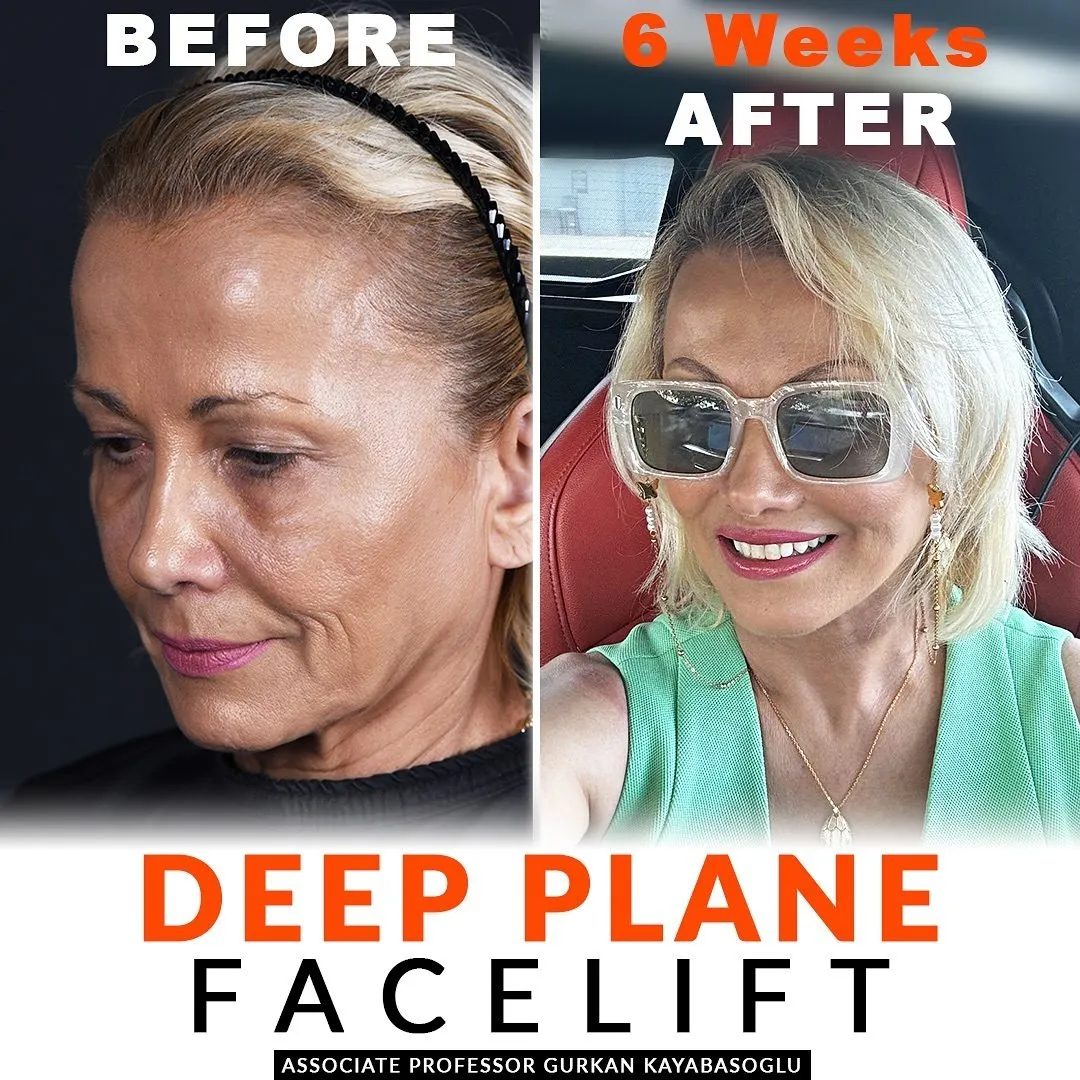 Before & after — Deep Plane Facelift
3. Anatomical Safety & Nerve Navigation in the Deep Plane
Operating beneath the SMAS layer requires an expert understanding of facial surgical anatomy. Because the motor nerves responsible for facial movement travel beneath this framework, navigating the deep plane demands absolute precision and specialized care.
Navigating the Sub-SMAS Surgical Window Safely
The deep plane is an anatomical space located directly above the protective deep fascia that covers the facial nerves. Once the surgeon enters this sub-SMAS window, dissection is carried out under direct visibility. Using natural surgical spaces, such as the premasseteric space, allows the surgeon to safely lift the composite tissue block while keeping the delicate nerve branches underneath completely untouched.
Nerve Protection Protocols and Distortion Prevention
| Clinical Risk | Advanced Deep Plane Prevention Protocol |
|---|---|
| Facial Nerve Branch Disruption | Dissection stays strictly within the bloodless plane above the deep muscle fascia, keeping the frontal, zygomatic, buccal, and mandibular nerve branches fully protected underneath. |
| Pixie Ear Deformity (Elongated Lobe) | Traditional lifts that pull the skin can drag the earlobe downward into a stretched position. In a deep plane lift, all structural weight is secured to deep, fixed fascia behind the ear, ensuring the lobe heals with zero pull. |
| Lateral Face Flattening | Pulling tissues sideways flattens the center of the face. The deep plane approach lifts tissues vertically and obliquely, restoring the natural, three-dimensional volume of the cheeks. |
4. Comprehensive Mid-Face and Jawline Structural Transformation
Releasing the facial ligaments allows for a comprehensive rejuvenation of the mid-face and jawline without relying on temporary or synthetic volume additions.
Natural Malar Fat Pad Elevation Without Fillers
As the face ages, the malar fat pad of the cheek slides downward, leading to hollow eyes and prominent lines around the nose and mouth. Instead of injecting high volumes of dermal fillers—which can create an overfilled or puffy look—a deep plane facelift lifts the displaced fat pad back to its youthful position over the cheekbone. This naturally restores a soft, smooth mid-face contour using your own tissues.
Restoring a Sharp Mandibular Border
Jowls form when loose jaw tissues drop past the lower border of the mandible. By releasing the mandibular retaining ligaments near the chin, the surgeon can pull the fallen tissues up cleanly. This straightens the jawline from the chin back to the angle of the jaw, recreating a sharp, smooth mandibular border.
Deep Plane Application Profiles
| Patient Indication | Anatomical Presentation | Deep Plane Target Advantage |
|---|---|---|
| Severe Mid-Face Deflation & Heavy Jowling | Deep nasolabial folds, fallen cheek fat pads, and heavy tissue sagging along the jawline. | Full release of zygomatic and masseteric ligaments to lift the entire lower and mid-facial framework smoothly. |
| Combined Facial Descent and Neck Laxity | Heavy jowls combined with loose neck skin and separated vertical platysma muscle bands. | Extended deep plane dissection carried continuously down into the neck, correcting the jawline and neck line together. |
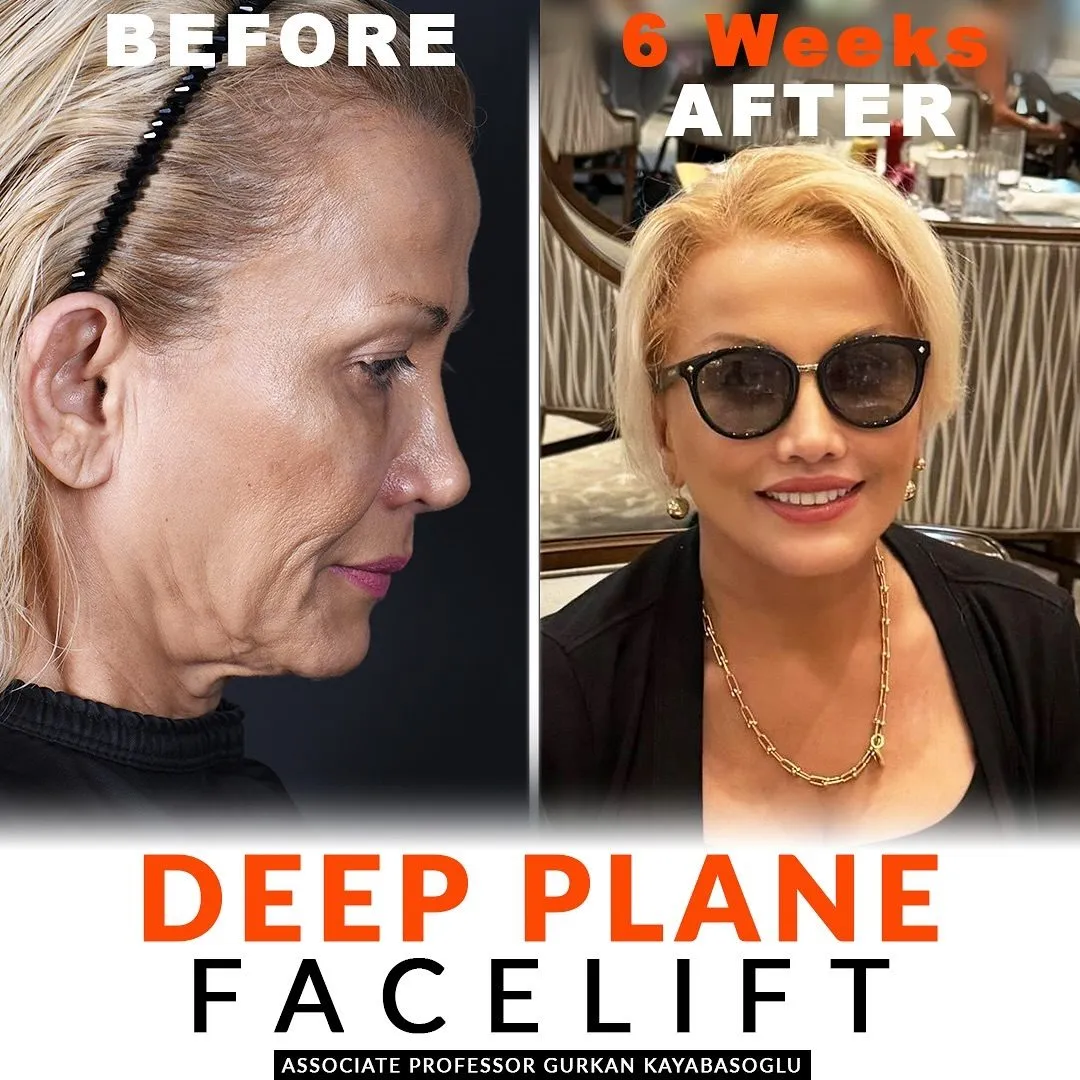 Before & after — Deep Plane Facelift
5. The Surgical Journey with Prof. Dr. Gürkan Kayabaşoğlu
Navigating the deep plane spaces requires an advanced surgical command of facial anatomy. In our Istanbul clinic, we plan each deep plane lift to precisely match the patient’s individual aging pattern, ensuring maximum structural correction while maintaining full safety.
The Deep Plane Facelift Clinical Workflow Steps
- Pre-Operative Structural Mapping: A meticulous analysis of the deep facial retaining ligaments, tissue descent vectors, and bone structure. Incision lines are traced precisely within the natural contours of the ear cartilage and hairline to ensure they heal completely out of sight.
- Entering the Sub-SMAS Window: Under general anesthesia, the surgeon creates a limited subcutaneous flap before entering the deep plane space beneath the SMAS layer. Dissection continues through this bloodless plane, keeping the overlying skin and muscle safely attached as a single, healthy block.
- Ligament Release & Anchoring: The surgeon identifies and releases the rigid zygomatic, masseteric, and mandibular retaining ligaments under direct vision. Once freed, the entire composite tissue block is elevated vertically and anchored securely to the strong, fixed deep structures behind the ear.
Why ENT and Facial Plastic Precision Ensures Natural Surgical Mobility
Because the deep plane sits directly over the motor nerves that control facial expressions, this technique demands specialized expertise. Professor Dr. Gürkan Kayabaşoğlu’s dual background in Otorhinolaryngology (ENT) and facial plastic surgery provides the high precision needed to navigate these deep structures safely, ensuring beautiful results with natural facial movement.
| Surgical Specialization Skill | Targeted Application in Deep Plane Surgery |
|---|---|
| Sub-SMAS Nerve Mapping | Navigating the delicate tissues above the facial nerve branches, ensuring all motor pathways remain untouched while releasing thick ligaments. |
| Composite Flap Balancing | Lifting the skin and muscle together, preserving the natural blood supply to encourage smooth healing and minimal swelling. |
| Structural Vector Anchoring | Securing the heavy structural layers deeply under the muscle so the skin heals with zero tension, avoiding pulled scars or distorted features. |
6. Deep Plane Facelift Recovery Dynamics & Timeline
Because a deep plane facelift moves the skin and muscle together as a single composite block, the delicate blood vessels between them are never disrupted. This preservation of natural micro-circulation means that while deep structural healing takes time, patients often experience less surface bruising and a more comfortable recovery than traditional methods.
Milestone Recovery Timeline
| Timeframe | Anatomical Healing Behavior | Clinical Care Priorities |
|---|---|---|
| Days 1 - 2 | Mild tightness along the jawline and neck. Surface bruising is typically minimal, though deep fluid retention begins to peak. | Rest with the head elevated. Initial clinic visit to remove or adjust the supportive compression wraps and check incisions. |
| Days 5 - 7 | Early acute swelling starts to clear. The preserved tissue layers settle securely into their new positions. | Return to the clinic to remove the fine, tension-free sutures from around the front of the ear canal and chin. |
| Days 10 - 14 | The majority of social swelling resolves. The newly anchored composite flap achieves solid primary stability. | Remaining hair-bearing and post-auricular sutures are removed. Light cover-up makeup can be safely applied if desired. |
| Weeks 3 - 4 | Facial contours appear soft, natural, and fully refreshed. Any minor internal firmness or numbness begins to fade. | Resume normal daily social routines and low-impact walking. Avoid heavy straining or intense physical workouts. |
| Months 3 - 6 | The deep structural tissues bond completely. Incisions fade into thin, nearly invisible lines hidden in natural creases. | Apply consistent high-SPF sun protection over incision lines. The final, sharp definition of the jaw and cheeks is realized. |
Post-Operative Care Protocols for Optimal Incision Maturation
Dos:
- Keep all incision lines perfectly clean and apply the recommended ointments precisely to encourage seamless, flat scarring.
- Rest exclusively on your back with your head comfortably elevated on extra pillows for the first three weeks to speed up fluid drainage.
- Use gentle, upward motions when washing your hair or face once cleared by your surgeon to protect the healing ear contours.
Don’ts:
- Do not apply ice packs or heating pads directly to your face, as temporary post-surgical numbness can prevent you from feeling temperature shifts.
- Do not twist or over-extend your neck forcefully; turn your chest and shoulders together to avoid pulling on the deep supportive sutures.
- Do not expose your healing facial structures to direct sunlight or steam rooms for at least the first three months of recovery.
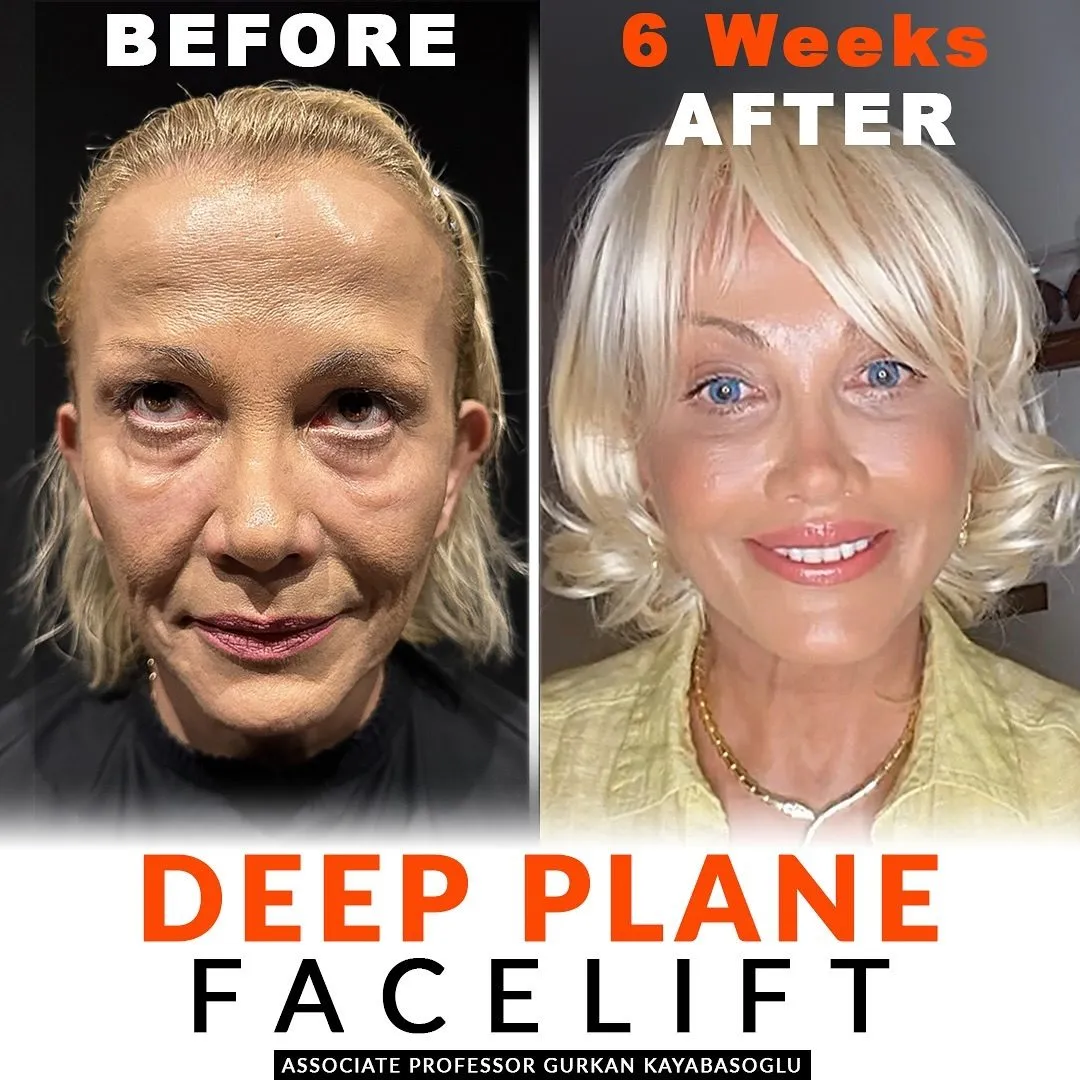 Before & after — Deep Plane Facelift
7. Cost & Logistics Analysis: Istanbul, Turkey
A deep plane facelift requires an exceptionally high level of surgical skill, specialized micro-instruments, and a deep understanding of sub-SMAS anatomy. Even though this advanced technique demands more operating room time and structural precision, undergoing a deep plane facelift in Istanbul, Turkey, remains highly cost-effective due to optimized medical systems and lower operational facility overheads.
Factors Influencing Deep Plane Pricing
- Advanced Sub-SMAS Dissection: Navigating beneath the muscle layer to release rigid retaining ligaments requires advanced training and specialized tools, which increases the procedural complexity compared to traditional surface options.
- Combined Multi-Level Rejuvenation: Combining the deep plane lift with a corset platysmaplasty, mid-face fat transfer, or eyelid adjustments increases the total surgery time, anesthesia requirements, and facility use.
- Premium Hospital Settings: Operating safely within the deep plane demands full general anesthesia inside state-of-the-art, accredited private hospitals equipped with comprehensive monitoring systems.
Global Price Comparison Grid
| Country / Region | Estimated Average Cost Range | Logistical Package Benefits |
|---|---|---|
| Istanbul, Turkey | €10,000 – €15,100 | All-inclusive care: Expert surgeon fees, accredited private hospital suite use, general anesthesia, luxury hotel lodging, and all private airport-clinic ground transfers. |
| United States (USA) | €35,000 – €52,900 | Rarely includes separate fees for the anesthesiologist, independent operating room facility rates, overnight hospital stays, or post-surgical medications. |
| United Kingdom (UK) | €30,000 – €45,300 | High hospital operational fees mean advanced sub-SMAS procedures or combined neck work carry substantial premium surcharges. |
| Canada | €28,000 – €42,300 | Cosmetic facial surgery is outside public health coverage; surgeon, operating facility and anaesthesia are billed separately, and travel or accommodation is never part of the quote. |
| Australia | €32,000 – €48,300 | Medicare does not fund cosmetic indications; high theatre and anaesthetist charges sit on top of the surgeon’s quote, with no transfer or accommodation support. |
Travel and Healing Logistics for Deep Plane Patients
Because a deep plane lift involves releasing internal ligaments and precise suture placement around the ears, ensuring proper early healing before travel is essential. International patients should plan for an 8 to 10-day stay in Istanbul. This timeline allows the composite tissue block to settle securely, allows for close monitoring of early fluid retention, and ensures all fine sutures are safely removed at the clinic before a comfortable departure flight.
8. Prof. Dr. Gürkan Kayabaşoğlu’s Deep Plane Philosophy
A masterfully executed deep plane facelift should never look like a surgical alteration; it should simply look like a restoration of your natural anatomy. True facial rejuvenation is achieved by freeing the internal anchor points that trap aged tissues, not by applying force to the surface skin.
The Pillars of Our Composite Rejuvenation Approach
- Respecting Tissue Unity: Skin and muscle age together as a single unit, and they should be lifted together. Moving them as a composite block preserves natural volume relationships and avoids the flat, pulled look caused by separating tissue layers.
- Release Over Tension: True rejuvenation does not require pulling hard. By physically releasing the stiff zygomatic and mandibular retaining ligaments, the heavy tissues of the mid-face and jawline glide back up into their youthful positions naturally, with zero tension on the skin edges.
- Preserving Dynamic Mobility: The face expresses emotion through movement. Working completely within the deep plane ensures that the muscles responsible for smiling and speaking remain fluid, responsive, and entirely free of artificial stiffness.
Deep Plane Surgical Application Matrix
| Structural Goal | Anatomical Challenge | Dr. Kayabaşoğlu’s Structural Solution |
|---|---|---|
| Cheek Volume Restoration | Lifting fallen malar fat pads without using temporary fillers. | Releasing the zygomatic retaining ligaments to smoothly slide the cheek fat pad upward over the cheekbones. |
| Jowl Correction | Smoothing heavy sagging tissues that disrupt a clean jawline. | Releasing the masseteric and mandibular ligaments to lift the lower face block cleanly away from the jaw border. |
| Cervical-Facial Definition | Correcting loose neck skin and sagging jaw angles simultaneously. | Extending the sub-SMAS dissection continuously into the neck to pull the entire lower framework up as one solid unit. |
9. Frequently Asked Questions (FAQ Matrix)
This comprehensive question-and-answer framework clarifies the anatomical, logistical, and structural details of the advanced deep plane facelift technique.
Why does a deep plane facelift look more natural than a traditional lift?
Traditional lifts separate the skin from the muscle, pulling the skin tight while leaving the underlying structures relatively flat. A deep plane lift leaves the skin attached to the muscle layer (SMAS) as a single composite block. By releasing the internal ligaments holding this block down, the entire facial structure glides up naturally, preventing any stretched or “windblown” look.
Does the deep plane technique carry a higher risk of nerve damage?
When performed by an expert facial plastic surgeon, the safety profile is exceptional. The facial motor nerves travel beneath the deep muscle fascia. The deep plane technique operates within a clear, bloodless space directly above this protective fascia under direct vision, allowing the surgeon to map and protect all nerve pathways confidently.
Why is there often less surface bruising with a deep plane lift?
Because the skin and muscle layers are kept together rather than peeled apart, the delicate blood vessels linking them remain completely intact. Preserving this natural micro-circulation reduces bleeding beneath the skin surface, often resulting in less visible bruising and a more efficient healing process for the skin envelope.
How long do the structural results of a deep plane facelift last?
A deep plane facelift delivers the longest-lasting results in facial rejuvenation, typically maintaining its structural integrity for 10 to 12 years or more. Because the actual deep retaining ligaments are released and anchored to fixed structures, the face ages from a much younger anatomical starting point.
What is the difference between a SMAS lift and a deep plane lift?
In a standard SMAS lift, the skin is peeled back and the underlying muscle is simply folded (plicated) or trimmed without releasing its deep attachments. A deep plane lift goes underneath the SMAS layer entirely to physically cut the restrictive anchor ligaments, allowing for an uncompromised, tension-free elevation of both the mid-face and jawline.
Will I experience numbness around my ears and face after surgery?
Some temporary numbness around the cheeks and incision lines is normal as microscopic sensory nerve fibers adapt to the repositioned tissues. This is not permanent and resolves gradually on its own within 3 to 6 months as full skin sensation naturally returns.