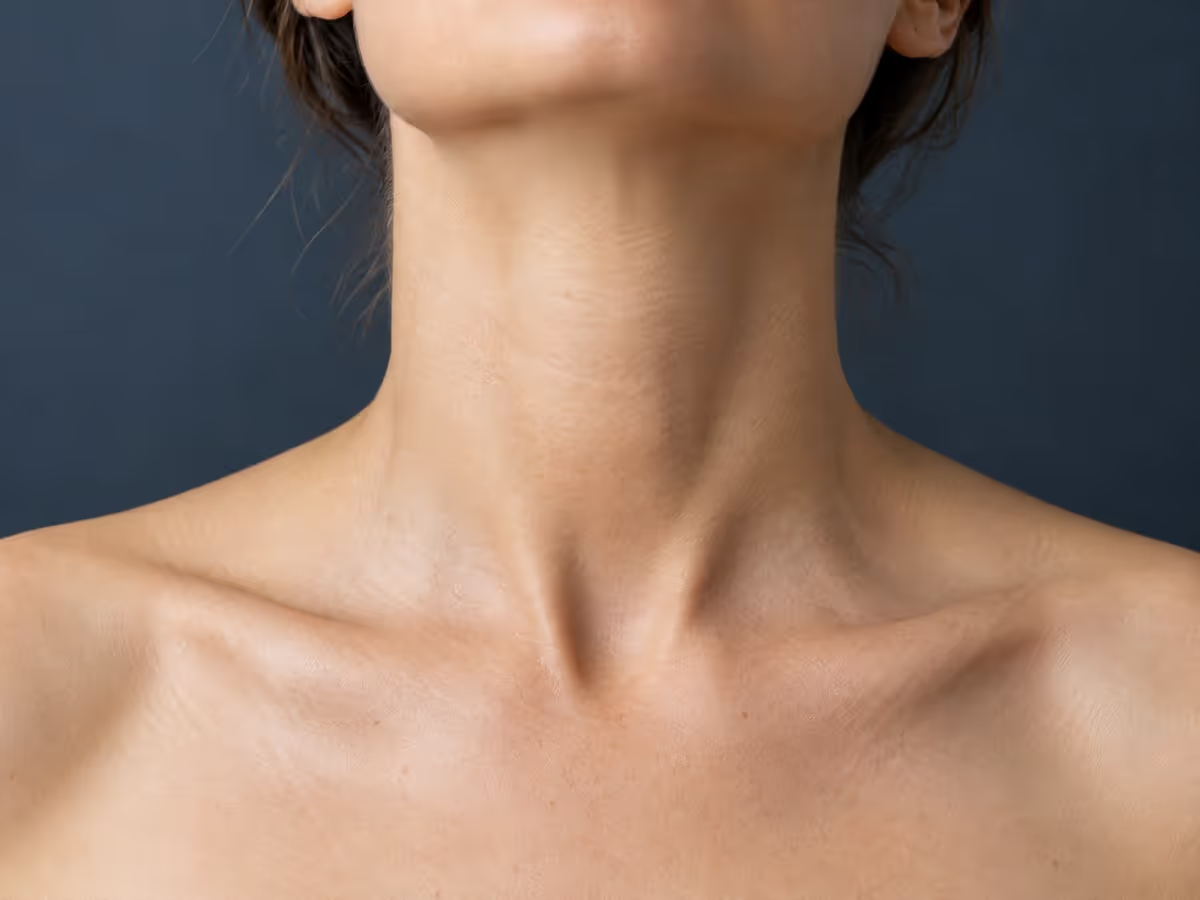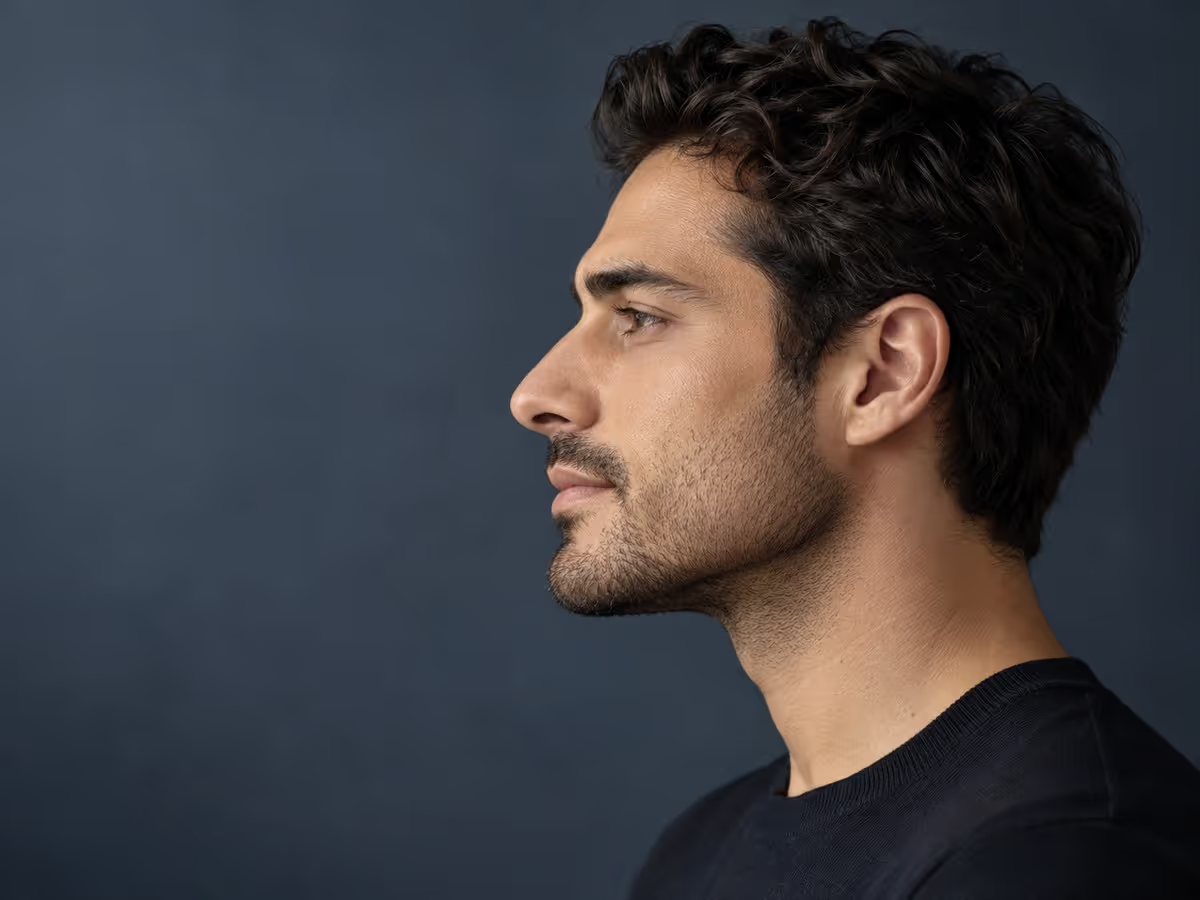
Mini facelift surgery, frequently referred to as a short-scar or minimal-incision facelift, is a highly effective, targeted surgical procedure designed to address early to moderate signs of aging in the lower third of the face. As structural support naturally weakens over time, the tissues along the jawline begin to sag, leading to the formation of early jowls and a loss of crisp mandibular definition. Undergoing a mini facelift in Istanbul, Turkey, with an experienced facial plastic surgeon allows for precise correction of this lower facial laxity through discrete, limited incisions hidden entirely along the natural curves of the ear. By adjusting the deep muscle architecture (SMAS) rather than simply stretching the surface skin, this procedure restores a sharp, youthful jawline and smooth lower cheeks with a significantly shorter recovery period and minimal downtime.
1. Introduction to Mini Facelift Surgery
What is a Mini Facelift? The Concept of Minimal Incision Rejuvenation
A mini facelift is a structural procedure specifically tailored to address localized tissue descent in the lower face and jawline. Unlike a traditional full facelift, which involves extensive dissection extending into the scalp and deep neck regions, the mini facelift isolates the problem areas directly. It focuses on elevating the dropped soft tissues of the lower cheeks back to their youthful positions, offering an efficient, highly focused alternative for individuals who do not require comprehensive upper face or extensive neck reconstruction.
- Targeted Lower Face Correction: Focuses explicitly on smoothing early jowls and restoring a clean, continuous jaw structure.
- The Short-Scar Approach: Employs small, hidden access lines that wrap discreetly around the front curves of the ear cartilage, completely avoiding long extensions into the posterior scalp.
- Optimized Healing Pathway: Designed for patients seeking long-term structural results without the longer downtime associated with full craniofacial surgery.
Ideal Candidates: Targeting Early Jowling
The ideal candidates for a mini facelift are typically individuals in their late 30s to early 50s who are beginning to notice the initial structural effects of gravity—such as slight drooping around the corners of the mouth, early jowl formation, and mild skin laxity along the jawline—but still possess good underlying skin elasticity and do not exhibit significant, heavy sagging in the central neck region.
2. The Technical Science of Limited SMAS Modification
Achieving a lasting, natural result with a mini facelift requires modifying the structural foundations beneath the surface, ensuring the procedure provides authentic deep support rather than a temporary skin pull.
Why Mini Does Not Mean Skin-Only: Deep Tissue Support
A common misconception is that a mini facelift only tightens the surface skin. A properly executed mini facelift relies on a limited SMAS (Superficial Musculoaponeurotic System) modification, such as a localized SMASectomy or plication. The surgeon accesses the structural muscle layer through a short incision, shifting the heavy tissue vectors upward and anchoring them firmly to fixed deep fascial structures. The skin is then allowed to rest naturally over the newly shaped foundation, preventing the tight, stretched appearance that results from pulling on the skin envelope alone.
Technical Comparison Matrix: Full Facelift vs. Mini Facelift
| Surgical Parameter | Traditional Full Facelift | Advanced Mini Facelift |
|---|---|---|
| Primary Anatomical Focus | Comprehensive mid-face, full jawline, and severe neck muscle correction. | Localized lower cheeks, early jowls, and immediate jawline definition. |
| Incision Path & Length | Extended lines inside the temple hair, around the ear, and far into the back hairline. | Limited line tracing the front edge of the ear canal and curving slightly behind the lobe. |
| Surgical Dissection Depth | Extensive Sub-SMAS or Deep Plane tissue mobilization across the entire face. | Targeted, limited SMAS mobilization isolated to the lower facial safe zones. |
| Average Social Downtime | 2 to 3 weeks for primary swelling and deep tissue reorganization to stabilize. | 7 to 10 days, allowing for a rapid and comfortable return to daily public routines. |
3. Anatomical Safety & Precision in Limited Dissection
Even though a mini facelift uses a shorter incision, it requires precise anatomical execution. Operating within the pre-auricular safe zone allows for excellent lower face lifting while keeping the critical deep facial nerves perfectly secure.
Navigating the Pre-Auricular Safe Zone
The mini facelift focuses its dissection within a specific anatomical window directly in front of and slightly below the ear. In this zone, the major motor branches of the facial nerve sit deeply beneath the protective parotid fascia. By staying superficial to this deep layer during SMAS mobilization, a skilled surgeon can safely lift the lower cheek structures without risking nerve irritation.
Targeted Tissue Mobilization Protocols
| Surgical Objective | Anatomical Execution Protocol |
|---|---|
| Bruising Minimization | Dissection is limited strictly to the lower face grid, avoiding the extensive tissue undermining used in full lifts. This leaves the surrounding blood vessels intact, keeping post-op swelling low. |
| Oblique Vector Orientation | The SMAS layer is lifted along a precise upward and backward angle. This directly opposes the downward drop of the jowls, restoring a smooth jawline while maintaining a natural look. |
| Tension-Free Skin Closure | All structural weight is supported by deep micro-sutures in the muscle layer. The surface skin is trimmed and closed with zero tension, ensuring the scars heal as faint, flat lines. |
4. Targeted Transformations: Refining the Lower Face & Jawline
The mini facelift provides focused correction for early structural aging along the jaw border, delivering clean contours where non-surgical options fall short.
Clearing Early Jowls to Restore a Smooth Mandibular Border
Jowls form as the fat pads of the lower cheek drop past the jawbone. A mini facelift accesses this specific pocket, lifts the displaced fat and muscle, and secures them back into a higher position. This straightens the mandibular border, defining the jawline from the chin back to the ear angle without altering the mid-face or brow.
Softening Lower Cheek Laxity Without Extensive Neck Surgery
For patients with mild skin laxity under the chin but noticeable sagging at the sides of the lower cheeks, a mini facelift offers a balanced solution. It lifts the lower cheek tissue outward and upward, smoothing out early lines near the corners of the mouth (marionette lines) without requiring a full, open neck lift.
Mini Facelift Laxity Profile Matrix
| Anatomical Presentation | Structural Suitability | Mini Facelift Action Plan |
|---|---|---|
| Early Jowl Sagging & Mild Cheek Laxity | Excellent candidate. Skin retains good elasticity; neck tissue shows no heavy muscle separation. | Short-scar entry with localized SMAS modification to quickly sharpen the jawline. |
| Severe Neck Laxity & Deep Mid-Face Hollows | Poor candidate for an isolated mini lift. Requires deep structural shifts. | Recommend combining the approach with a deep plane facelift or a full corset neck lift for balanced results. |
5. The Surgical Journey with Prof. Dr. Gürkan Kayabaşoğlu
Even though a mini facelift uses a shorter incision path, achieving a natural result demands the highest level of facial plastic surgical skill. In our Istanbul clinic, each mini lift is tailored to match the patient’s individual jawline anatomy, prioritizing safety and a swift return to daily activities.
The Mini Facelift Clinical Workflow Steps
- Pre-Operative Anatomic Planning: A detailed structural analysis of lower cheek tissue movement and jawline symmetry. The limited incision path is carefully marked along the natural, hidden creases in front of the ear cartilage.
- Anesthesia Options: Depending on patient preference and comfort, the procedure can be performed safely under local anesthesia paired with deep sedation, or standard general anesthesia, ensuring a completely relaxed experience.
- SMAS Securing and Trimming: The surgeon accesses the lower facial layers through the short incision line, performs a targeted mobilization of the SMAS layer, and secures it firmly to fixed deep structures. Excess skin is carefully trimmed away, ensuring no tension remains on the edges.
Why Short Incision Precision Requires Expert Facial Plastic Skill
Working through a limited incision requires a surgeon who can achieve deep structural longevity within a smaller surgical space. Professor Dr. Gürkan Kayabaşoğlu’s specialized focus on facial plastic surgery ensures that the mini lift delivers authentic, deep SMAS support rather than a temporary skin pull, creating a natural contour that moves beautifully when you speak or smile.
| Surgical Specialization Skill | Targeted Application in Mini Facelift Surgery |
|---|---|
| Discrete Pre-Auricular Tracing | Placing incision lines exactly inside the natural contours of the ear cartilage, ensuring the resulting marks heal as faint, hidden lines. |
| Targeted SMAS Suspension | Shifting the heavy tissue foundations of the lower cheek upward, avoiding the flat or pulled look caused by simple skin tightening. |
| Limited Dissection Control | Focusing mobilization exclusively on the jawline problem areas, preserving surrounding blood flow to encourage a rapid recovery. |
6. Mini Facelift Recovery Dynamics & The Rapid Healing Timeline
The mini facelift is frequently referred to as a “weekend lift” because its localized dissection plane preserves the surrounding blood vessels and lymphatic pathways. While it remains a true surgical procedure that requires proper healing, the limited tissue mobilization results in minimal surface bruising and a swift return to daily activities.
Milestone Recovery Timeline
| Timeframe | Anatomical Healing Behavior | Clinical Care Priorities |
|---|---|---|
| Days 1 - 2 | Mild swelling and localized tightness concentrate around the jawline and the front of the ears. Surface bruising is usually minor. | Rest with the head elevated on extra pillows. Keep the light, supportive dressing clean and dry around the ear area. |
| Days 4 - 5 | Acute lower facial swelling begins to clear rapidly. The trimmed skin edges initiate secure early closure. | Visit the clinic to remove the small, tension-free sutures from the natural creases in front of the ear canal. |
| Days 7 - 10 | The jawline appears smooth and well-defined. Most visible swelling subsides, making the procedure easy to conceal. | Patients can confidently return to light public activities and remote office work. Faint residual marks can be covered with light makeup. |
| Weeks 3 - 4 | The anchored SMAS layers achieve strong structural stability. Natural skin elasticity adapts fully to the new contours. | Gradually resume regular physical exercise and gym routines. Avoid any direct, forceful pressure on the ears. |
| Months 2 - 3 | The well-placed incisions fade into thin, flat lines that match the natural skin tone of the ear cartilage. | Apply consistent sun protection over the pre-auricular lines. The final, sharp contour of the lower face is realized. |
Post-Operative Care Protocols for Discrete Scar Maturation
Dos:
- Clean the incision lines in front of your ears gently using the recommended antiseptic solution to prevent crusting.
- Sleep flat on your back with your head elevated for the first two weeks to speed up fluid drainage from the lower cheeks.
- Wear loose, button-down shirts to avoid pulling clothing forcefully over your ears and healing incision lines.
Don’ts:
- Do not apply heavy, oil-based cosmetic creams directly onto the healing incisions until the sutures are completely removed.
- Do not use tight telephone headsets or rest your jaw heavily in your hands during the early weeks of structural healing.
- Do not expose the sides of your face to direct, intense sunlight for at least the first two months to ensure scars fade beautifully.
7. Cost & Logistics Analysis: Istanbul, Turkey
Because a mini facelift involves a more localized surgical field and a shorter operating time than a comprehensive full facelift, the procedural expenses are lower. Choosing to undergo a mini facelift in Istanbul, Turkey, offers an efficient balance of expert surgical care, accredited hospital facilities, and highly optimized logistical pricing.
Factors Influencing Mini Facelift Pricing
- Anesthesia Configuration: The option to perform this procedure under local anesthesia with deep intravenous sedation instead of general anesthesia can lower overall hospital fees.
- Isolated Anatomical Focus: Focusing exclusively on the lower face reduces surgical time, minimizing operating theater and instrumentation costs.
- Combined Enhancements: Adding micro-liposuction under the chin to clear stubborn fat cells updates the final treatment plan, maintaining efficiency while maximizing jawline definition.
Global Price Comparison Grid
| Country / Region | Estimated Average Cost Range | Logistical Package Benefits |
|---|---|---|
| Istanbul, Turkey | €8,000 – €11,500 | All-inclusive care: Expert surgeon fees, accredited clinic or hospital facility use, anesthesia, premium hotel accommodations, and all private airport-clinic ground transfers. |
| United States (USA) | €28,000 – €40,300 | Surgeon fees are typically quoted in isolation; facility usage, surgical materials, and follow-up checks often incur extra costs. |
| United Kingdom (UK) | €24,000 – €34,500 | High local operational overheads mean that even short-scar procedures carry substantial base rates. |
| Canada | €22,400 – €32,200 | Cosmetic facial surgery is outside public health coverage; surgeon, operating facility and anaesthesia are billed separately, and travel or accommodation is never part of the quote. |
| Australia | €25,600 – €36,800 | Medicare does not fund cosmetic indications; high theatre and anaesthetist charges sit on top of the surgeon’s quote, with no transfer or accommodation support. |
Travel and Healing Logistics for International Patients
Although a mini facelift features a rapid recovery profile, ensuring primary tissue stability before traveling home is key. International patients should schedule a stay of 6 to 8 days in Istanbul. This window allows the early lower facial swelling to stabilize, allows for direct evaluation of the tissue vectors, and ensures all fine pre-auricular sutures are safely removed at the clinic before a comfortable flight back.
8. Prof. Dr. Gürkan Kayabaşoğlu’s Mini Facelift Philosophy
A mini facelift should never be viewed as a lesser version of a full facelift; it is a highly specialized, preventative, and maintenance procedure. True lower face rejuvenation aims to support the facial structures before severe aging takes over, helping you maintain a naturally crisp jawline without changing your expressions.
The Pillars of Our Mini Rejuvenation Approach
- Proactive Structural Maintenance: Addressing early jowls as soon as they appear prevents the underlying muscle framework from stretching out over time. This approach delivers longer-lasting results with minimal surgical disruption.
- Definition Without Over-Tightening: A sharp jawline is achieved by lifting the dropped muscle layer back to its original home, not by pulling the skin tight. This technique ensures the corners of the mouth and cheeks look soft, natural, and free of artificial stiffness.
- Respecting the Short-Scar Boundaries: A limited incision demands precise execution. Every millimeter of the incision line is hidden within the natural folds of the ear, ensuring you can wear your hair pulled back with complete confidence.
Mini Facelift Surgical Application Matrix
| Structural Goal | Anatomical Challenge | Dr. Kayabaşoğlu’s Structural Solution |
|---|---|---|
| Mandibular Line Alignment | Early tissue pooling that creates an irregular, sagging jawline. | Targeted SMAS plication to pull the lower cheek mass up and backward, straightening the jaw contour. |
| Jowl Weight Reduction | Mild soft tissue descent causing sagging at the corners of the mouth. | Re-anchoring the lower facial fat compartments higher up, smoothing out early marionette lines. |
| Discrete Scar Concealment | Avoiding any visible signs of surgery around the ears or hairline. | Tracing incisions precisely along the inner edge of the ear cartilage, leaving no marks in the hair. |
9. Frequently Asked Questions (FAQ Matrix)
This comprehensive question-and-answer framework clarifies the anatomical, technical, and recovery details of advanced mini facelift surgery.
How long do the structural results of a mini facelift typically last?
Because the procedure modifies the deep SMAS layer rather than just tightening the skin, the results are highly durable. A mini facelift typically maintains its structural integrity for 7 to 10 years. While natural aging continues, you will always look significantly younger than if you had not undergone the procedure.
Can a mini facelift be performed under local anesthesia?
Yes. Because the surgical field is localized and does not extend deep into the neck or upper face, a mini facelift can be performed comfortably under local anesthesia paired with deep intravenous sedation. This approach ensures a completely pain-free experience while avoiding the recovery window associated with full general anesthesia.
How does a mini facelift differ from a non-surgical thread lift?
A thread lift uses temporary, dissolvable threads to temporarily pull back sagging skin, with results usually lasting less than a year. A mini facelift is a precise surgical procedure that physically trims excess skin and permanently repositions and anchors the deep muscle layers (SMAS), providing a long-term structural reset.
Will a mini facelift address sagging skin in the center of my neck?
An isolated mini facelift provides excellent correction for the jawline and lower cheeks, but it has limited effects on the central neck. If you have significant neck sagging, heavy muscle bands, or loose skin under the chin, combining the mini lift with a targeted neck lift or platysmaplasty will provide a more balanced outcome.
Are the scars from a short-scar facelift visible if I wear my hair up?
The incision line is carefully hidden within the natural curves in front of the ear canal and follows the crease right behind the earlobe. It does not extend backward into the scalp hair. Once fully healed, the incision fades into a thin, faint line that is virtually invisible, allowing you to wear any hairstyle with confidence.
What is the ideal age to consider undergoing a mini facelift?
Most patients are between 38 and 55 years old. The procedure is ideal when you first notice early jowls or a softening jawline, but your skin still retains good natural elasticity. Addressing these structural concerns early provides a subtle, preventative rejuvenation that looks completely natural.