Rhinoplasty, commonly referred to as a nose job, is a highly sophisticated surgical procedure aimed at reshaping the nose for either aesthetic enhancement, functional improvement, or both. As the central feature of the human face, the nose plays a critical role in overall facial symmetry and respiratory health. Undergoing rhinoplasty in Istanbul, Turkey, under the care of a board-certified ENT and facial plastic surgeon ensures that both the internal breathing structures and external aesthetics are optimized simultaneously.
1. Introduction to Rhinoplasty
What is Rhinoplasty?
Rhinoplasty is not a one-size-fits-all procedure; it modifies the delicate bone, cartilage, and soft tissue framework of the nose. The operation can be classified based on its primary objectives and surgical history:
- Cosmetic Rhinoplasty: Alters the external appearance, size, shape, and proportions of the nose to improve facial harmony.
- Functional Rhinoplasty: Corrects internal structural blockages (such as a deviated septum or turbinate hypertrophy) to restore unimpeded breathing.
- Septorhinoplasty: A combined approach that simultaneously addresses both aesthetic concerns and functional airway restrictions.
Primary vs. Revision Rhinoplasty
| Category | Surgical Context | Complexity & Structural Considerations |
|---|---|---|
| Primary Rhinoplasty | The patient’s first nasal surgery. | Anatomy is unaltered; cartilage reserves (septum) are intact, presenting predictable tissue planes. |
| Revision Rhinoplasty | Secondary or subsequent surgery to correct previous outcomes. | High complexity due to scar tissue, altered anatomy, and potential need for rib or ear graft harvesting. |
2. Candidacy & Structural Alterations
Who is the Ideal Candidate?
An eligible candidate for rhinoplasty must meet specific developmental, physical, and psychological benchmarks:
- Nasal Maturity: The facial bones must be fully developed (generally 16+ for females, 17-18+ for males).
- Physical Health: Good overall health, non-smokers, or individuals willing to stop smoking to avoid healing delays.
- Anatomical Concerns: Individuals with visible humps, asymmetric bridges, drooping tips, or chronic nasal airway blockages.
Common Anomalies Addressed by Rhinoplasty
| Anatomical Issue | Structural Cause | Surgical Remedy |
|---|---|---|
| Dorsal Hump | Excess cartilage or bone on the nasal bridge. | Precise reduction or smoothing of the bridge profile. |
| Crooked Nose | Deviated nasal bones or severe septal cartilage slant. | Osteotomies (repositioning bones) and septal reconstruction. |
| Droopy Nasal Tip | Weak lower lateral cartilages or lack of tip support. | Tip suturing techniques and structural cartilage grafting. |
| Wide Nasal Base | Flared alar cartilages or wide bony base. | Alar base reduction or narrow osteotomies. |
3. Open vs. Closed Rhinoplasty & Modern Techniques
Modern rhinoplasty focuses on structural longevity and minimal tissue trauma. The choice between surgical approaches depends entirely on the degree of tip reshaping needed and the complexity of the internal nasal anatomy.
Open vs. Closed Rhinoplasty Comparison Matrix
| Feature | Open Rhinoplasty Approach | Closed Rhinoplasty Approach |
|---|---|---|
| Incision Site | Small trans-columellar incision + internal cuts. | Incisions are strictly placed inside the nostrils. |
| Surgical Visibility | Direct, complete visualization of the cartilage structure. | Limited tactile and visual access (blind approach). |
| Graft Stabilization | Highly accurate placement and suturing of complex grafts. | Challenging for intricate structural changes. |
| External Scar | Fades into a microscopic, faint line under the nose. | Zero visible external scarring. |
| Ideal For | Revision surgeries, complex tips, and severe deviations. | Minor bridge reductions and straight nasal corrections. |
Advanced Surgical Methodologies
- Piezo (Ultrasonic) Rhinoplasty: Instead of using traditional hammers and chisels, high-frequency ultrasonic waves precisely reshape nasal bones. This method protects surrounding soft tissues, blood vessels, and mucous membranes, dramatically decreasing post-operative bruising and swelling.
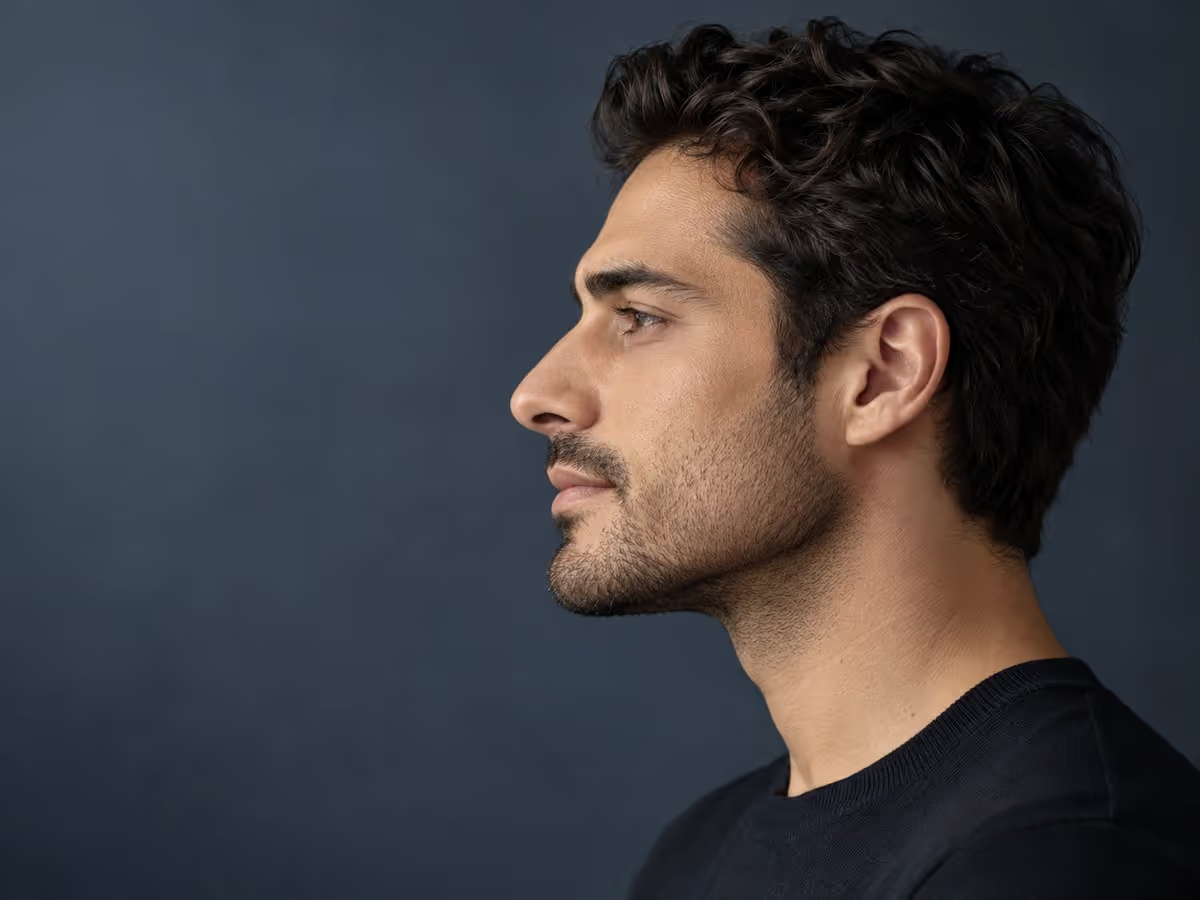
- Preservation Rhinoplasty: A modern philosophy that involves lowering the nasal bridge from underneath rather than cutting away the top surface. It preserves the natural, continuous profile line of the nose.
- Structural Rhinoplasty: Rebuilds and reinforces a weak nasal framework using advanced cartilage grafting methods, ensuring the tip does not droop or collapse over the years.
4. The Surgical Journey with Prof. Dr. Gürkan Kayabaşoğlu
A successful rhinoplasty requires precise planning and execution. In our Istanbul clinic, we combine modern technology with extensive medical expertise to ensure both aesthetic satisfaction and optimal nasal function.
The Clinical Workflow Steps
- Pre-Operative 3D Simulation & Consultation: Detailed clinical analysis of the facial ratios, skin thickness, and internal airway. We use high-resolution imaging to plan the targeted surgical changes and align expectations.
- Personalized Surgical Strategy: Selecting the specific approach (Open, Closed, or Preservation) based entirely on the anatomical findings and your primary structural goals.
- The Operation Day: Performed under general anesthesia in a fully equipped hospital environment, focusing on tissue protection and high precision.
Why an ENT Background Provides a Definitive Advantage
Professor Dr. Gürkan Kayabaşoğlu’s specialized background in Otorhinolaryngology (ENT) ensures that the respiratory system is never sacrificed for superficial aesthetic gains.
| ENT Specialization Benefit | Impact on Rhinoplasty Outcomes |
|---|---|
| Airway Architecture Mastery | Expert handling of the internal nasal valve area, turbinates, and septal deviations during aesthetic reconstruction. |
| Simultaneous Corrective Power | The ability to resolve deep functional problems (chronic breathing difficulties or sinus issues) within the same surgical window. |
| Advanced Graft Engineering | Extensive experience in harvesting and sculpting delicate septal, ear, or rib cartilage grafts for severe structural cases. |
5. Recovery Timeline & Splint/Cast Care
Healing after rhinoplasty requires patience, as nasal tissues retain fluid longer than other facial areas. Following a structured post-operative protocol is essential to support the newly reshaped bone and cartilage framework.
Milestone Healing Timeline
| Timeframe | Anatomical Changes & What to Expect | Required Care & Cleanliness Protocol |
|---|---|---|
| Days 1 - 3 | Peak swelling and bruising under the eyes. Nasal congestion due to internal swelling. | Apply cold compresses to the cheeks. Keep the head elevated at 45 degrees. Use prescribed nasal sprays. |
| Days 6 - 7 | Significant drop in acute swelling. The external splint and internal silicone splints are removed. | Attend the clinic for splint removal. Gently begin cleaning the outer nasal skin with mild solutions. |
| Weeks 2 - 4 | Around 70% of external swelling resolves. Minor bruising fades completely. Normal breathing resumes. | Return to desk work. Avoid blowing the nose forcefully or wearing heavy glasses. |
| Months 3 - 12 | The nasal bridge refines. The nasal tip softens and drops slightly into its definitive position. | Apply strict sun protection (SPF 50+). Avoid contact sports or direct trauma to the nasal area. |
Post-Operative Dos and Don’ts Checklist
Dos:
- Sneeze through your mouth rather than your nose to prevent sudden internal pressure spikes.
- Clean your nostrils gently using saline sprays and cotton swabs as directed by the clinical team.
- Keep the external protective cast completely dry during showers until your scheduled removal appointment.
Don’ts:
- Do not wear heavy eyeglasses or sunglasses directly on the nasal bridge for at least 2 months (use tape or contact lenses).
- Do not rest or sleep on your side or stomach; maintain a strict back-sleeping position with pillows.
- Do not smoke or use nicotine products, as they restrict tissue oxygenation and increase the risk of delayed healing.
6. Why Choose Istanbul, Turkey for Rhinoplasty?
Istanbul stands as a leading international hub for advanced rhinoplasty surgery. The city attracts thousands of patients globally due to its combination of surgical precision, high-volume surgical expertise, and sophisticated medical infrastructure.
Key Advantages of Undergoing Surgery in Istanbul
- High-Volume Surgical Expertise: Surgeons in Istanbul perform a remarkably high number of nasal reconstructions annually, leading to advanced refinement in managing diverse ethnic variations and complex revision cases.
- A-Class Hospital Infrastructure: Rhinoplasty procedures are conducted in ultra-modern facilities equipped with the latest Piezo technology, advanced monitoring systems, and luxury recovery suites.
- All-Inclusive Medical Packaging: International patient journeys are highly streamlined, typically covering private airport transfers, native-speaking translators, and premium hotel stays close to the clinic.
Procedure Variants & Price Guide
| Procedure Variant | Estimated Price Range (Istanbul) |
|---|---|
| Primary rhinoplasty | €4,500 – €8,650 |
| Septorhinoplasty (aesthetic + functional) | €5,000 – €8,750 |
| Septoplasty (functional only) | €3,000 – €4,300 |
Global Cost Comparison Matrix
The competitive pricing model in Turkey is driven by regional economic structures, lower operational facility costs, and favorable exchange rates, ensuring premium medical care without the premium price tag.
| Country / Region | Estimated Average Cost Range | Package Inclusions & Structural Perks |
|---|---|---|
| Istanbul, Turkey | €3,000 – €8,750 | Comprehensive care: Surgeon fee, general anesthesia, luxury facility costs, all ground transfers, and post-op checkups. |
| United States (USA) | €10,500 – €30,700 | Typically covers the basic surgeon fee only; hospital fees, anesthesia, and medication are billed independently. |
| United Kingdom (UK) | €9,000 – €26,200 | Private hospital rates are high; long follow-up windows or specialized revision techniques incur substantial extra charges. |
| Canada | €8,400 – €24,500 | Cosmetic facial surgery is outside public health coverage; surgeon, operating facility and anaesthesia are billed separately, and travel or accommodation is never part of the quote. |
| Australia | €9,600 – €28,000 | Medicare does not fund cosmetic indications; high theatre and anaesthetist charges sit on top of the surgeon’s quote, with no transfer or accommodation support. |
7. Risks, Management, and Structural Safety
Rhinoplasty is a highly intricate procedure involving the alteration of bone and cartilage frameworks. While severe complications are rare when performed by a specialist, understanding potential risks and how they are managed is essential for patient safety.
Potential Risks and Clinical Protocols
| Potential Risk | Description | Clinical Mitigation Strategy |
|---|---|---|
| Nasal Airway Restriction | Internal narrowing or structural collapse affecting post-op breathing. | Prevented by using spreader grafts and maintaining strict structural support for the nasal valve area. |
| Asymmetry | Minor visual variations between the left and right sides of the nose. | Controlled using precise intraoperative measurements and stabilization sutures to counter healing forces. |
| Skin Envelope Issues | Poor skin contraction, especially in very thick or very thin skin types. | Managed with customized post-op taping, targeted steroid drops if needed, and delicate soft-tissue handling. |
| Delayed Healing | Prolonged swelling or minor incision inflammation. | Minimized by utilizing advanced Piezo technology, reducing tissue trauma, and enforcing strict smoking bans. |
Advanced Safety Workflows
- High-Definition Direct Imaging: Allows for complete control over tissue resection, ensuring no excess cartilage is removed from crucial support zones.
- Accredited Facility Standards: All procedures are performed in surgical theaters meeting international sterilization and ventilation protocols.
- Comprehensive Follow-up Matrix: Standardized digital monitoring timelines ensure any healing anomalies are addressed immediately.
8. Prof. Dr. Gürkan Kayabaşoğlu’s Rhinoplasty Philosophy
A successful rhinoplasty should never result in a standardized or artificial appearance. Professor Dr. Gürkan Kayabaşoğlu approaches every nasal reconstruction as a unique structural artwork, strictly guided by personalized facial harmony and patient safety.
The Core Principles of Our Nasal Philosophy
- The 7 Billion Noses Rule: Our guiding motto is: “If there are 7 billion people on Earth, there should be 7 billion different noses.” We completely reject carbon-copy, “westernized”, or cookie-cutter noses in favor of designs that honor your individual anatomy and cultural heritage.
- Health First (The Hippocratic Priority): As an expert dedicated to facial structures, Dr. Kayabaşoğlu adheres strictly to the “Health First” principle. A nose must perform its primary biological function—unimpeded respiration—perfectly before any cosmetic goals are finalized.
- The Profiloplasty Synergy: The nose does not sit in isolation. A heavy nose is often visually exaggerated by a small or retruded chin. We analyze the complete facial profile (glabelle, nose, lips, and chin) to achieve true facial balance without over-reducing nasal tissues.
Aesthetic & Functional Customization Grid
| Surgical Philosophy Focus | The Traditional Error | Dr. Kayabaşoğlu’s Structural Solution |
|---|---|---|
| Aesthetic Outcome | Creating an over-rotated, deeply scooped “operated look” that leaves patients looking similar. | Sculpting natural angles and maintaining a strong structural backing to achieve a “natural-born” look. |
| Airway Management | Aggressively narrowing the nasal bridge, leading to internal valve collapse and lifelong breathing struggles. | Utilizing Piezo ultrasonic precision to preserve mucosal linings and reinforcing the lateral crus with structural grafts. |
| Ethnic Identity Preservation | Erasing the patient’s unique genetic characteristics to enforce standard European facial dimensions. | Harmonizing base width and tip projection while respecting and upgrading the patient’s authentic ethnic architecture. |
9. Frequently Asked Questions (FAQ Matrix)
This comprehensive, structured question-and-answer framework addresses the most vital cosmetic, functional, and logistical concerns regarding rhinoplasty surgery in Istanbul.
What is the difference between open and closed rhinoplasty?
Open rhinoplasty uses a tiny incision across the columella (the tissue between the nostrils), providing complete visual access to the nasal structure. It is ideal for complex reshaping and revision cases. Closed rhinoplasty places all incisions inside the nostrils, leaving no external scars, making it suitable for less complex bridge reductions.
How does Piezo (Ultrasonic) rhinoplasty reduce recovery times?
Traditional methods use manual chisels to break nasal bones, causing significant vascular trauma. Piezo technology utilizes precise ultrasonic vibrations that cut only hard bone tissue while leaving surrounding blood vessels, skin, and mucosal linings completely unharmed. This drastically minimizes post-op bruising, swelling, and pain.
Can thick or thin skin affect my rhinoplasty results?
Yes, skin thickness changes the surgical approach. Thick skin hides minor cartilage adjustments but retains fluid longer, requiring structural grafting to create definition. Thin skin shows structural changes easily but exposes even microscopic cartilage imperfections, requiring extreme surface smoothing and delicate camouflage techniques.
Will rhinoplasty fix my chronic snoring or breathing issues?
If your breathing difficulties or snoring stem from internal structural blockages like a deviated septum, enlarged turbinates, or a collapsed nasal valve, a functional septorhinoplasty will directly correct these anomalies. An ENT specialist ensures these internal respiratory airways are widened during the cosmetic alteration.
How many days must I stay in Turkey for a nose job?
International patients need to allocate a minimum of 6 to 7 days in Istanbul. The timeline includes: Day 1 for your physical consultation and 3D planning; Day 2 for the surgery; Days 3 to 6 for resting at your hotel; and Day 6 or 7 for the removal of your external thermoplastic cast and internal silicone splints, followed by your travel clearance.
When will the final shape of my new nose be completely visible?
While you will see a significant aesthetic change immediately after the cast is removed on Day 7, healing is a gradual journey. About 70% of the swelling subsides within the first month. The remaining fine swelling, especially at the nasal tip, resolves slowly over 12 months, which is when the final structural definition is achieved.