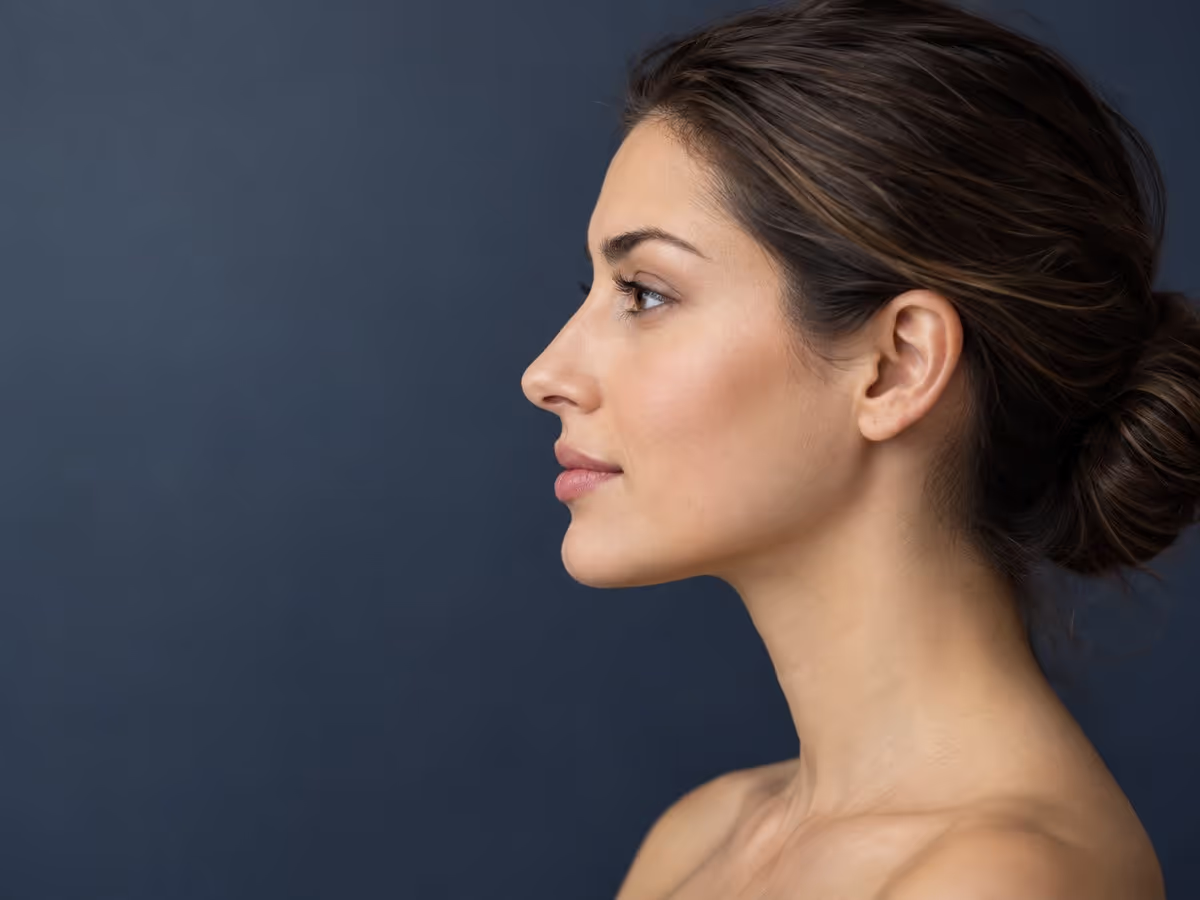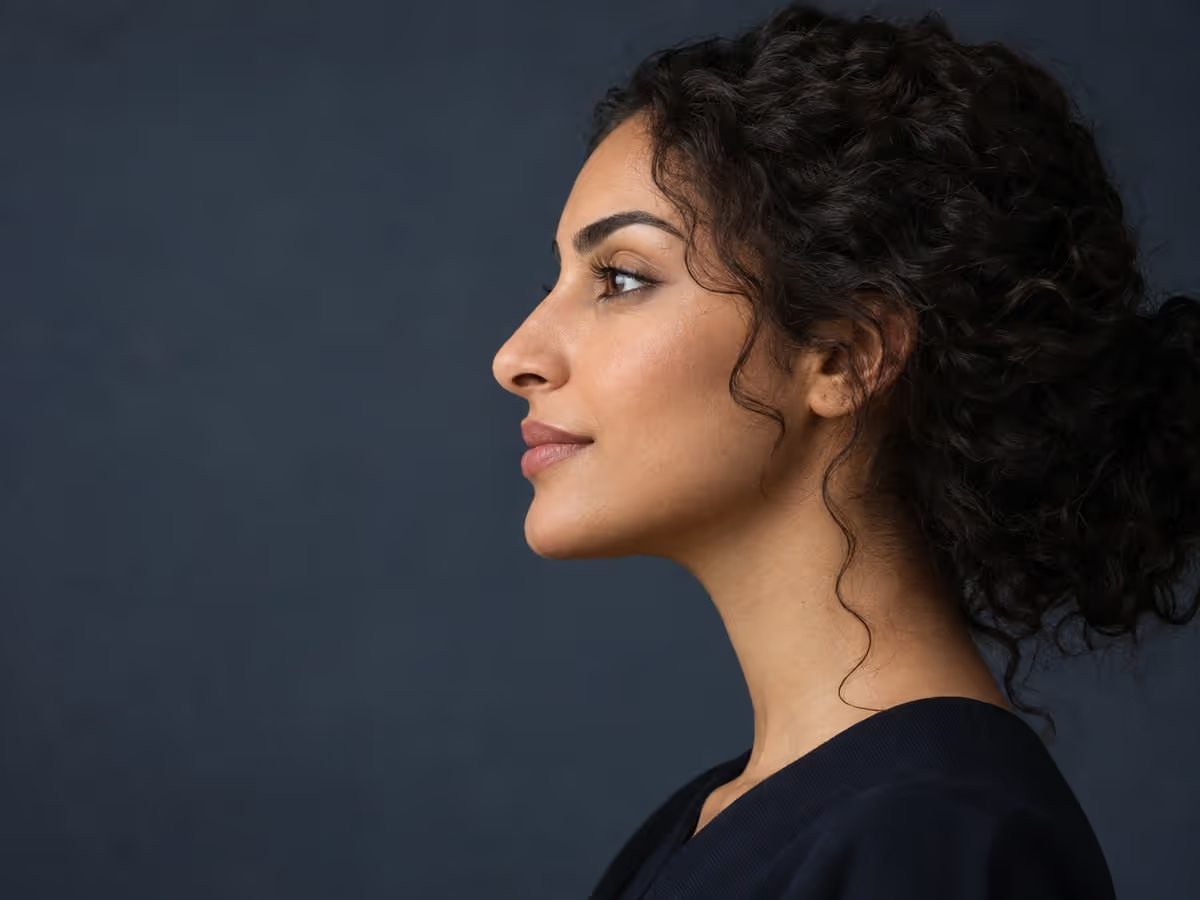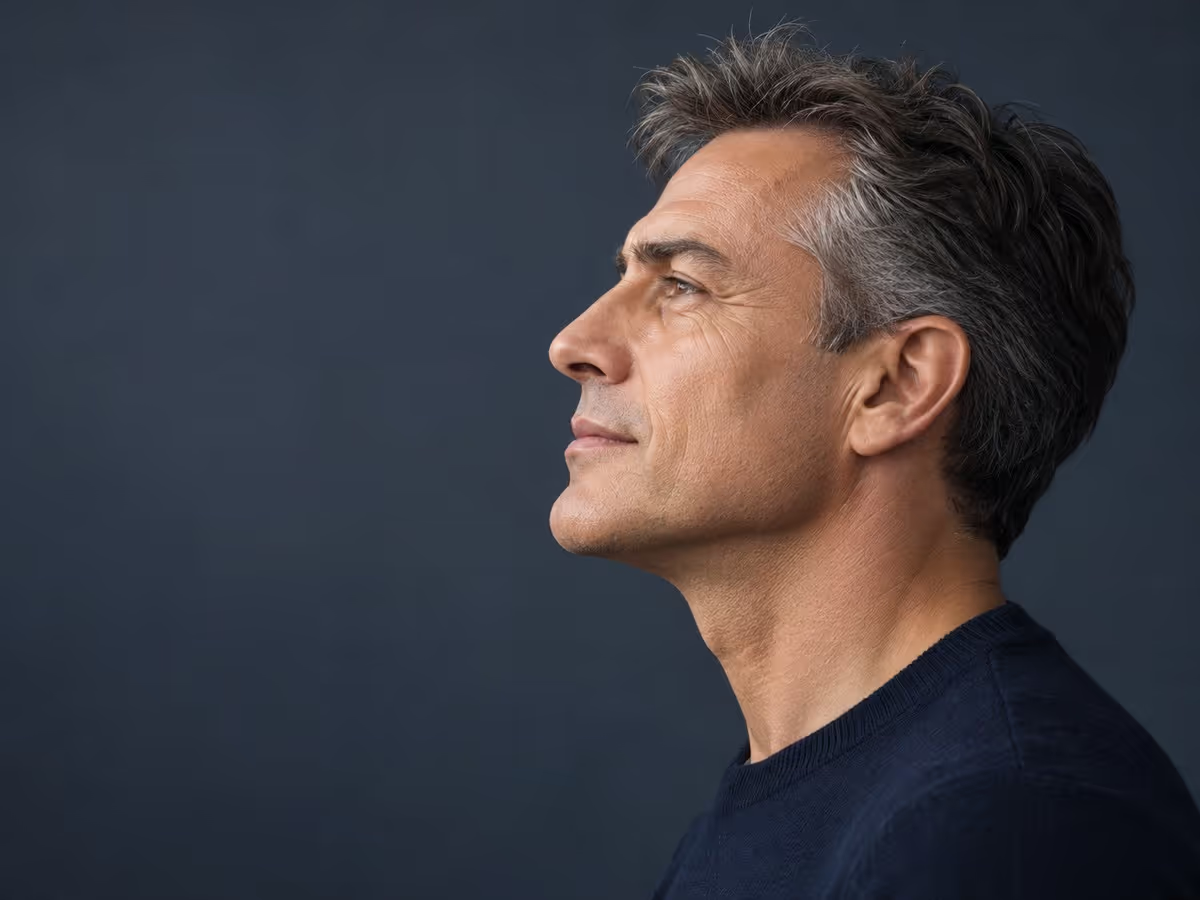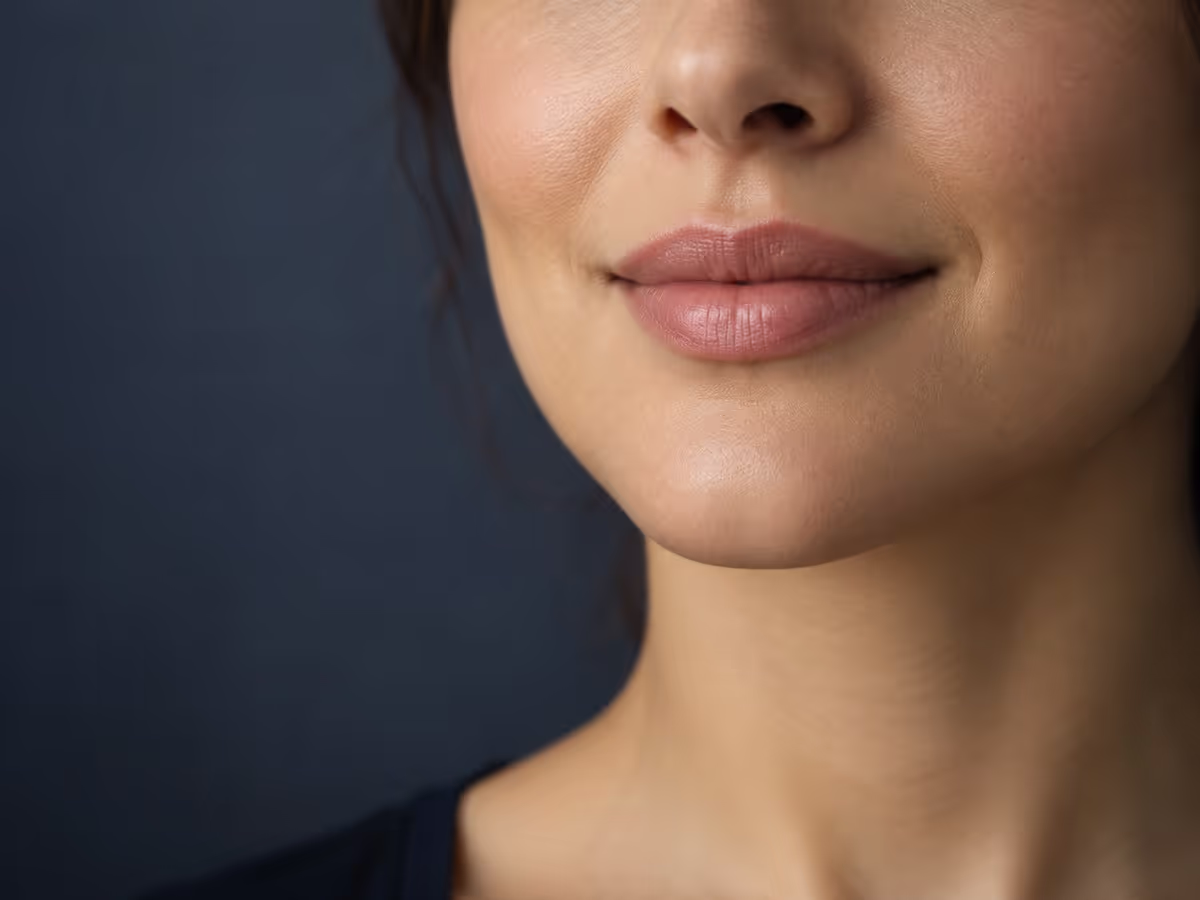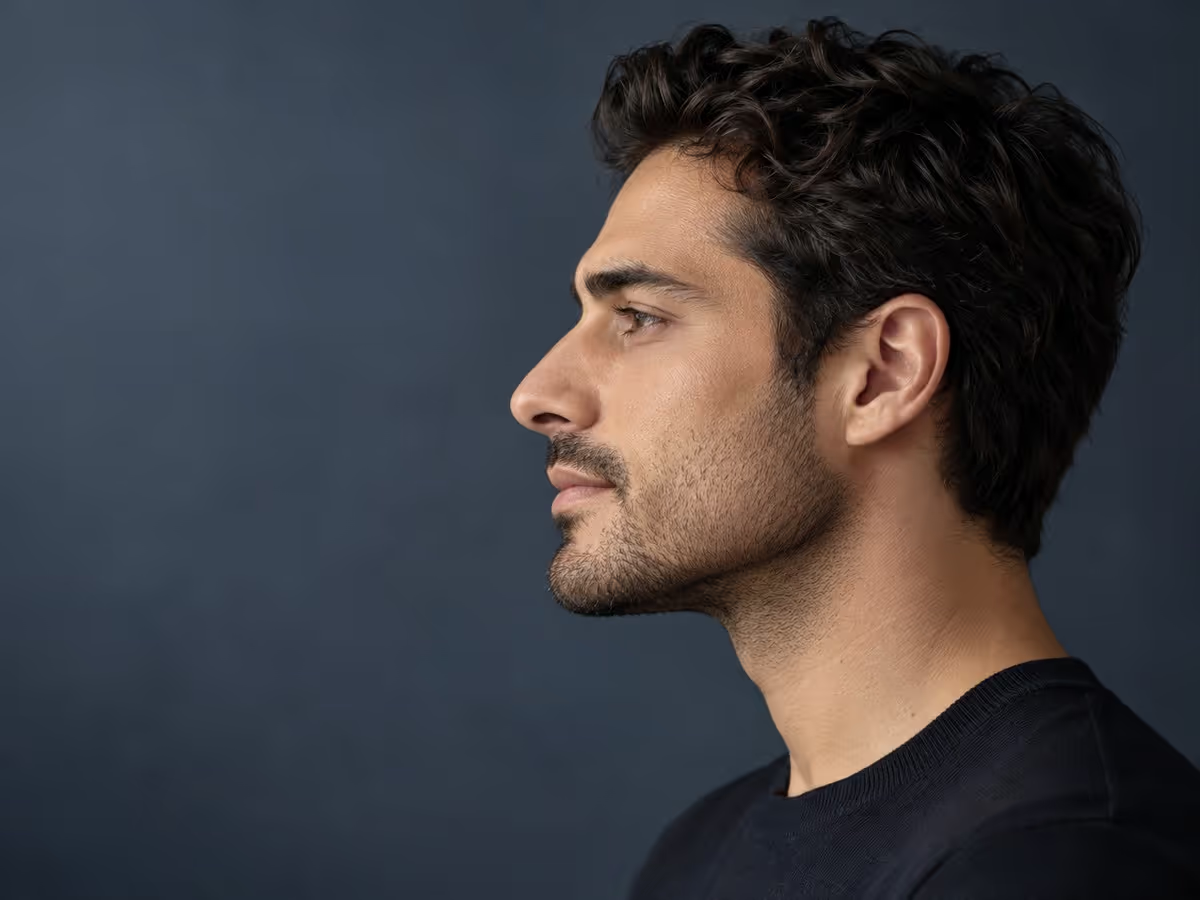
Facelift surgery, medically known as rhytidectomy, is an advanced surgical procedure designed to correct structural facial aging by repositioning sagging deep tissues, restoring volume, and tightening the overlying skin envelope. As the face ages, gravity, loss of tissue elasticity, and the weakening of deep retaining ligaments cause a downward shift of the cheeks, the formation of prominent jowls along the jawline, and loose skin in the neck. Undergoing a facelift in Istanbul, Turkey, with an experienced facial plastic surgeon, ensures a highly customized approach that focuses on deep structural lifting rather than simple skin stretching, delivering a natural, long-lasting rejuvenation that preserves your unique facial expressions.
1. Introduction to Facelift Surgery (Rhytidectomy)
Understanding Architectural Facial Aging
Facial aging is not merely a superficial skin problem; it is a multi-layered architectural shift. Over time, changes occur across several distinct anatomical levels: the bone framework undergoes subtle resorption, fat compartments deflate or shift downwards, and the deep supportive muscle-tissue layer weakens. A modern facelift addresses this descent at its source by lifting the underlying foundations rather than just pulling the skin taut.
- Structural Foundation Lifting: Moving the deep tissue layers back to their youthful positions, which naturally cleans up the jawline and lifts the cheeks.
- Skin Envelope Adjustment: Redraping the skin over the new, elevated foundation without applying heavy tension, keeping the skin looking natural.
- Comprehensive Rejuvenation: Addressing mid-face sagging, lower facial jowls, and loose neck tissue simultaneously to achieve balanced facial harmony.
The Shift from Skin-Only Tension to Deep Tissue Restructuring
Early facelift methods focused strictly on pulling and trimming the skin. Because the heavy underlying muscles and fat were left sagging, the skin had to bear all the tension, often resulting in a flattened, wide, or obviously operated “windblown” look. Modern facial surgery relies entirely on lifting the deep structures, using the skin only as a tension-free covering that heals with minimal scarring.
2. The Science of Deep Plane vs. SMAS Facelift Techniques
Achieving a long-lasting and natural rejuvenation depends directly on how the surgeon modifies the deep structural layer of the face, known as the SMAS.
The Superficial Musculoaponeurotic System (SMAS)
The SMAS is a continuous layer of dense connective tissue and muscle that blankets the deeper structures of the face and connects directly to the neck muscles. It acts as the anchor point for the facial features. By tightening or repositioning the SMAS, the surgeon can move the heavy tissues of the cheeks and jawline upward securely without placing any stress on the outer skin layers.
Technical Comparison Matrix: Facelift Methodologies
| Surgical Technique | Anatomical Manipulation | Clinical Outcome & Longevity |
|---|---|---|
| Skin-Only Facelift | Only the skin is separated, pulled back, and trimmed. The underlying SMAS layer is left untouched. | Short-lived results (usually less than 2 years). High risk of visible stretching and widened scars due to tension. |
| SMAS Plication / Ectomy | The skin is lifted, and the SMAS layer is either folded over (plicated) or partially cut and sutured to tighten it. | Reliable, natural results lasting 7 to 10 years. Cleanly defines the jawline and lower face with zero skin tension. |
| Deep Plane Facelift | The skin and SMAS are kept together as a single layer. The surgeon enters beneath the SMAS to release deep retaining ligaments. | Exceptional mid-face and jawline elevation lasting over 10 to 12 years. Offers the most natural look by lifting the entire structural block unit. |
3. Anatomical Safety & Nerve Preservation in Facial Surgery
Operating within the deep layers of the face requires absolute anatomical precision. The primary priority during any structural facial lift is protecting the delicate nerve pathways that control facial expressions and sensation.
Mapping the Branches of the Facial Nerve
The facial nerve provides motor innervation to all the muscles responsible for facial expression. As it exits the skull, it divides into five major branches—frontal, zygomatic, buccal, marginal mandibular, and cervical—that travel beneath the SMAS layer. A specialized surgeon operates within strict anatomical planes, ensuring that tissue dissection remains safely above or precisely beneath these nerve pathways to prevent any temporary or permanent mobility changes.
Protecting Sensory Architecture and Vector Direction
| Anatomical Structure | Surgical Preservation Protocol |
|---|---|
| Great Auricular Nerve | This vital sensory nerve travels along the surface of the neck muscle near the earlobe. The surgeon maps its location precisely during dissection to avoid post-operative earlobe numbness. |
| Parotid Gland Architecture | The main salivary gland sits directly beneath the SMAS in the cheek region. Suturing and tightening the SMAS layer must be performed without compressing or penetrating this glandular tissue. |
| Vertical Lifting Vectors | To prevent an unnatural, horizontal “pulled” appearance, tissues are repositioned using a strictly vertical or oblique vector. This moves the underlying framework back along the exact path it aged, preserving natural expressions. |
4. Surgical Extensions: Neck Lift and Structural Fat Grafting
A comprehensive facial rejuvenation addresses both tissue sagging and volume loss, extending modifications smoothly from the mid-face down through the neck line.
Platysmaplasty: Restructuring the Neck Foundation
The neck ages in tandem with the lower face. The platysma muscle can separate over time, creating vertical bands and contributing to a heavy, undefined neck profile. During a combined facelift and neck lift, the surgeon accesses the center of the neck through a small, well-hidden incision under the chin. The separated platysma muscle edges are tightly sutured back together—a technique known as a corset platysmaplasty—which re-creates a sharp, firm, and youthful jawline angle.
Restoring Deflated Volume with Micro-Fat Transfer
Lifting sagged tissues solves the problem of gravity, but it does not fix the natural loss of facial fat that happens with age. To restore a youthful fullness to hollow temples, deflated cheeks, or deep folds around the mouth, structural fat grafting is integrated into the procedure. The patient’s own fat cells are harvested gently from the abdomen or thighs, purified, and re-injected in tiny droplets to create a soft, natural contour.
Customizing the Lift Based on Aging Degrees
| Aging Classification | Anatomical Presentation | Recommended Surgical Combination |
|---|---|---|
| Mild to Moderate Lower Face Sagging | Early jowl formation along the jaw, minimal neck skin laxity, preserved mid-face volume. | Mini-Facelift or Limited-Incision SMAS Lift focused entirely on the jawline. |
| Advanced Facial & Neck Descent | Prominent jowls, hollow cheeks, visible vertical platysma neck bands, and loose skin. | Full Deep Plane or Extended SMAS Facelift combined with a Corset Platysmaplasty and Structural Fat Grafting. |
5. The Surgical Journey with Prof. Dr. Gürkan Kayabaşoğlu
Rejuvenating the facial framework requires a detailed understanding of both deep muscle systems and surface aesthetics. In our Istanbul clinic, every facelift is treated as a custom architectural project, balancing safety with natural-looking structural corrections.
The Facelift Clinical Workflow Steps
- Pre-Operative Structural Mapping: A meticulous evaluation of your bone structure, skin elasticity, and the exact vector of deep tissue descent. The incision paths are precisely mapped along the natural contours of the ear to ensure they blend seamlessly into the skin folds.
- Deep Tissue Dissection & Release: Performed under general anesthesia. The surgeon elevates the skin flap carefully and enters the deep SMAS plane, gently releasing the stiff retaining ligaments that hold the sagged tissues in their aged positions.
- Vector Repositioning & Micro-Suturing: The heavy structural layers of the cheeks, jawline, and neck are lifted vertically and anchored securely to the firm tissue zones behind the ear. The skin is then redraped smoothly without tension, and excess skin is precisely trimmed before closure.
Why ENT and Facial Plastic Surgery Expertise Ensures Natural Expressions
A successful facelift should never look stiff, frozen, or pulled. Professor Dr. Gürkan Kayabaşoğlu’s dual expertise in Otorhinolaryngology (ENT) and facial plastic surgery provides an advanced understanding of deep facial anatomy, protecting nerve health while restoring youthful mobility.
| Surgical Specialization Skill | Targeted Application in Facelift Surgery |
|---|---|
| Nerve Tracking Precision | Navigating safely within the complex tissue planes beneath the SMAS layer, ensuring all branches of the facial nerve remain completely undisturbed. |
| Tension-Free Skin Closure | Placing the structural weight entirely on the deep muscle layers so the outer skin edge closes with zero pull, preventing distorted earlobes or wide scars. |
| Dynamic Mobility Mapping | Aligning the surgical lifting vectors with the natural movement patterns of your face, ensuring full, expressive freedom when smiling or speaking. |
6. Facelift Recovery Dynamics & Timeline
Healing from a structural facelift requires a patient, step-by-step approach. Because modern techniques place all structural tension on the deep SMAS layer rather than the surface skin, the incision lines heal under optimal conditions, leading to discrete, high-quality scarring and a comfortable recovery phase.
Milestone Recovery Timeline
| Timeframe | Anatomical Healing Behavior | Clinical Care Priorities |
|---|---|---|
| Days 1 - 2 | Mild to moderate swelling and tightness around the jaw and neck. Surgical drains, if placed, collect early fluid retention. | Rest with the head highly elevated. The initial supportive compression wraps are removed or adjusted at the clinic. |
| Days 6 - 7 | Acute bruising begins to fade into a yellowish tone. The skin edges initiate solid primary closure. | Visit the clinic for the removal of the fine sutures located around the front of the ear and under the chin. |
| Days 10 - 14 | The majority of visible facial swelling subsides. The deep tissues begin to bind securely in their new positions. | Remaining sutures behind the ear and hairline are removed. Light makeup can be applied to cover fading bruises. |
| Weeks 3 - 6 | Facial contours look natural and refreshed in social settings. Minor internal numbness starts to resolve gradually. | Return to normal social routines and light walking. Avoid heavy lifting or strenuous cardiovascular exercise. |
| Months 3 - 6 | The incision lines turn from faint pink to thin, flat white lines that blend seamlessly into natural skin folds. | Apply consistent sun protection (SPF 50+) over the scars. The final structural definition of the jawline is fully realized. |
Post-Operative Incision Care and Rules
Dos:
- Keep the incision lines clean and completely dry during the first 48 hours, applying prescribed antibiotic ointments exactly as directed.
- Sleep exclusively on your back with two or three pillows to keep your head elevated for at least the first three weeks to minimize morning swelling.
- Wear open, button-up, or zippered shirts to avoid pulling clothing over your head and accidentally catching the healing ear incisions.
Don’ts:
- Do not apply direct heat or ice packs to the cheeks or neck, as temporary post-operative skin numbness can prevent you from feeling temperature damage.
- Do not turn or twist your head forcefully from side to side; move your entire upper body when looking around to protect the deep neck sutures.
- Do not expose the healing facial incisions to direct sunlight, tanning beds, or steam rooms for the first three months of recovery.
7. Cost & Logistics Analysis: Istanbul, Turkey
Facelift surgery is a highly customized procedure requiring a deep understanding of facial anatomy and extensive surgical experience. While deep tissue reconstruction and volume restoration increase the complexity of the operation, undergoing a facelift in Istanbul, Turkey, remains highly cost-effective due to streamlined medical systems and lower operational facility overheads.
Factors Influencing Facelift Surgery Pricing
- Surgical Technique and Complexity: Deep plane techniques or extended SMAS lifts require precise dissection under the muscle layer, which increases the operating time compared to basic skin-only lifts.
- Combined Procedures: Integrating a corset platysmaplasty (neck lift), blepharoplasty (eyelid surgery), or micro-fat grafting to restore volume affects the overall anesthesia, facility, and material costs.
- Hospital Accreditation and Safety: Performing complex facial surgery under general anesthesia requires fully equipped, accredited private hospitals to ensure complete patient safety and comprehensive monitoring.
Procedure Variants & Price Guide
| Procedure Variant | Estimated Price Range (Istanbul) |
|---|---|
| Facelift | €10,000 – €15,100 |
| Face + neck lift | €11,200 – €17,300 |
Global Price Comparison Grid
| Country / Region | Estimated Average Cost Range | Logistical Package Benefits |
|---|---|---|
| Istanbul, Turkey | €10,000 – €17,300 | All-inclusive care: Expert surgeon fees, private hospital suite stay, general anesthesia, luxury hotel lodging, and all private airport-clinic ground transfers. |
| United States (USA) | €35,000 – €60,600 | Typically excludes separate anesthesiologist rates, independent operating room facility fees, overnight hospital stays, and post-operative care. |
| United Kingdom (UK) | €30,000 – €51,900 | High private hospital operational costs; advanced deep plane adjustments or fat grafting carry heavy premium surcharges. |
| Canada | €28,000 – €48,400 | Cosmetic facial surgery is outside public health coverage; surgeon, operating facility and anaesthesia are billed separately, and travel or accommodation is never part of the quote. |
| Australia | €32,000 – €55,400 | Medicare does not fund cosmetic indications; high theatre and anaesthetist charges sit on top of the surgeon’s quote, with no transfer or accommodation support. |
Travel and Healing Logistics for International Patients
Because structural facial lifts require precise incision monitoring and early suture management, a proper initial recovery period before traveling is essential. International patients are advised to plan a stay of 8 to 10 days in Istanbul. This timeline allows the deep tissues to stabilize, allows for close monitoring of fluid retention, and ensures all fine sutures around the ears and under the chin are safely removed at the clinic before a comfortable departure flight.
8. Prof. Dr. Gürkan Kayabaşoğlu’s Facelift Philosophy
A successful facelift should never alter the fundamental character of your face; it should simply look like a refreshed, rested version of yourself from ten or fifteen years ago. True facial rejuvenation is achieved by moving sagging foundations back to where they once sat, not by stretching the surface skin.
The Pillars of Our Structural Rejuvenation Approach
- Expression Preservation Over Tightness: The human face relies on complex movements to convey emotion. By avoiding horizontal pulling and working exclusively with vertical vectors, we ensure that your natural smile, expressions, and animations remain completely unaffected.
- Tension-Free Surface Healing: All structural weight is carried by the deep, strong SMAS layer. The skin is simply redraped and allowed to rest naturally over the new foundation. This eliminates the risk of a “windblown” look and allows the incisions around the ear to heal into flat, discrete lines.
- Restoring Balanced Volume: Aging involves both gravity and deflation. We balance our surgical lifts with precise micro-fat grafting to restore volume where it has been lost, ensuring a soft, youthful fullness rather than a hollow, pulled look.
Facelift Surgical Application Matrix
| Structural Goal | Anatomical Challenge | Dr. Kayabaşoğlu’s Surgical Solution |
|---|---|---|
| Jawline Realignment | Clearing heavy jowls that disrupt a clean, sharp jaw contour. | Releasing the mandibular retaining ligaments and shifting the deep SMAS layer vertically. |
| Mid-Face Elevation | Lifting deflated cheeks and smoothing deep nasolabial folds. | Entering the deep tissue planes to reposition the malar fat pads back over the cheekbones. |
| Neck Line Contouring | Tightening loose skin and correcting vertical muscle bands under the chin. | Performing a corset platysmaplasty to suture the neck muscle edges into a firm, youthful sling. |
9. Frequently Asked Questions (FAQ Matrix)
This systematic question-and-answer framework clarifies the structural longevity, incision safety profiles, and recovery expectations associated with advanced facial rejuvenation surgery.
Will a facelift make me look pulled or unnaturally altered?
No. The pulled or “windblown” appearance occurs when a surgeon relies on pulling the skin horizontally to achieve a lift. In our practice, the skin is never placed under tension. The lift is achieved entirely within the deep SMAS layer using vertical vectors, ensuring your natural expressions and animations look exactly like yourself, only younger.
Where are the facelift incisions placed, and will they be visible?
The incisions are meticulously hidden within your natural facial contours. They begin inside the hairline at the temple, follow the natural curves right in front of the ear canal, wrap around the earlobe, and extend backward into the lower scalp hairline. Once fully healed, they fade into faint, flat lines that blend seamlessly into your natural skin folds.
How many years will the results of a structural facelift last?
While no procedure can stop the natural aging process entirely, a deep SMAS or deep plane facelift resets your facial clock by 10 to 12 years. Because the heavy deep tissue structures are physically anchored into new positions, you will always look significantly younger than you would have without the surgery.
Is there a specific ideal age to undergo a facelift procedure?
Facial rejuvenation is based on structural anatomy and tissue descent rather than chronological age. Most patients seek a facelift between the ages of 40 and 65, when jowl formation, mid-face hollowing, and neck laxity become prominent. As long as a patient is in good medical health, the procedure can be safely performed.
Is a facelift painful, and how long does facial numbness last?
Surprisingly, a facelift is not considered a highly painful procedure; most patients describe a feeling of deep tightness and pressure rather than sharp pain. Mild sensory numbness around the cheeks and ear incisions is completely normal and occurs as tiny nerve fibers adapt. This resolves fully on its own over 3 to 6 months.
Can a facelift be safely combined with non-surgical treatments?
Yes. While a surgical lift corrects gravity and deep tissue sagging, it does not address surface skin texture or dynamic fine lines. Combining a facelift with laser resurfacing, chemical peels, or targeted wrinkle-relaxing injections can optimize surface brilliance alongside deep structural correction.