Fox Eye surgery, medically integrated with an advanced temporal lift, is a highly specialized facial plastic procedure designed to elevate the outer corner of the eye (lateral canthus) and the tail of the brow. As the skin and connective tissues in the temple region naturally lose their elasticity, the outer brow drops, creating a heavy, tired, or hooded look around the upper eyelids. Undergoing a fox eye lift in Istanbul, Turkey, with an experienced facial plastic surgeon allows for a permanent structural correction of this periorbital slant. By accessing the deep architectural layers through small incisions hidden entirely within the hairline, this procedure gently elongates the eyes and creates an attractive, refreshed upward vector without leaving any visible scars or altering your natural expressions.
1. Introduction to Fox Eye Surgery (Temporal Lift)
What is Fox Eye Surgery? The Art of Periorbital Vector Alignment
A surgical fox eye lift is not a superficial skin pull; it is a deep-tissue rejuvenation method that repositions the soft tissue envelope of the outer eye and brow frame. By lifting the deep fascia layers in the temple, the surgeon changes a downward or flat outer eye tilt into a subtle, almond-shaped upward angle. This opens up the periorbital area, clears away mild skin hooding, and reveals a naturally alert appearance.
- Lateral Canthal Elevation: Lifts the outer corners of the eyes to eliminate a sad, tired, or drooped appearance.
- Outer Brow Positioning: Raises the outer third of the eyebrow, creating a beautiful arch that opens up the upper eyelid space.
- Invisible Access Lines: Achieved through discrete incisions placed 2 to 3 centimeters inside the hair bearing scalp, ensuring complete discretion.
Temporal Lift vs. Thread Lifts: Understanding Structural Longevity
Many patients initially explore non-surgical thread lifts to achieve the fox eye look. However, threads rely on temporary barbs in the shallow fat layer, which quickly give way under the constant movement of facial expressions, with results fading in just a few months. A surgical temporal lift provides a long-term solution by physically lifting and anchoring the deep, non-stretching fascial layers to the bone, delivering stable, lasting results that age naturally with your face.
2. The Technical Science of Deep Temporal Fascia Suspension
Achieving a beautiful, lasting fox eye shape requires operating within the deep tissue planes of the temple, ensuring all structural tension is supported by strong fascial layers rather than the surface skin.
Navigating the Deep vs. Superficial Temporal Fascia Planes
The temple region consists of distinct anatomical layers: the skin, the superficial temporal fascia (also known as the temporoparietal fascia), a pocket of loose tissue, and the deep temporal fascia which sits directly over the temple muscle. A masterfully executed temporal lift involves dissecting safely between these layers, freeing the dropped brow and eye tissues from the orbital rim, and anchoring them firmly to the tough, immovable deep temporal fascia using long-lasting micro-sutures.
Technical Comparison Matrix: Temporary Thread Pulls vs. Deep Fascial Temporal Lift
| Procedural Parameter | Temporary Non-Surgical Thread Pulls | Advanced Deep Fascial Temporal Lift |
|---|---|---|
| Primary Mechanism of Action | Grips shallow fat tissue using dissolvable synthetic threads. | Physically mobilizes and secures the deep structural tissue planes. |
| Anatomical Fixation Point | Sits loosely within the moving, superficial fat layer of the skin. | Anchored firmly to the dense, unyielding deep temporal fascia layer. |
| Asymmetry Corrective Control | Limited; threads cannot precisely alter uneven bone or muscle pull. | Excellent; allows the surgeon to customize lift vectors for each side. |
| Result Longevity Profile | Fades rapidly within 3 to 6 months as the threads dissolve. | Provides a permanent structural reset lasting 8 to 10 years. |
 Before & after — Fox Eye Surgery
3. Anatomical Safety & Nerve Protection in the Temple Grid
Operating within the temporal region requires absolute surgical precision. The temple houses delicate vascular structures and critical nerve branches that command upper facial expressions, making deep anatomical knowledge vital for a safe procedure.
Preserving the Temporal Branch of the Facial Nerve
The temporal (frontal) branch of the facial nerve runs through the superficial temporal fascia layer as it travels up to power the frontalis muscle, which raises the eyebrow. To keep this nerve completely secure, the surgeon navigates strictly beneath this superficial layer, operating directly on top of the glistening deep temporal fascia. This deep, subfascial pathway provides a completely safe environment, ensuring the brow can move naturally with zero risk of nerve weakness.
Managing the Temporal Vascular Network
| Anatomical Landmark | Surgical Management & Safety Protocol |
|---|---|
| The Sentinel Vein | A reliable venous landmark located near the outer edge of the brow. It acts as a warning sign that the facial nerve branch is close by. The surgeon identifies and carefully seals this vein under direct vision to prevent bleeding and maintain a clear view. |
| Deep Cranial Fixation | The lifted brow envelope and outer eye tissues are secured directly to the dense deep temporal fascia or the bone liner (cranial periosteum) using permanent micro-sutures, ensuring the lift remains stable over time. |
| Hair Preservation Incisions | Incisions are placed vertically well behind the hairline. The hair follicles are carefully angled away rather than cut across, ensuring normal hair growth resumes over the healing site. |
4. Targeted Transformations: Elongating the Eyes & Lifting the Brows
A downward slant at the outer corner of the eye can make a person look tired or sad, even when well-rested. Rebuilding this regional support changes the geometric balance of the eyes, providing an immediately refreshed look.
Correcting the Lateral Canthal Tilt
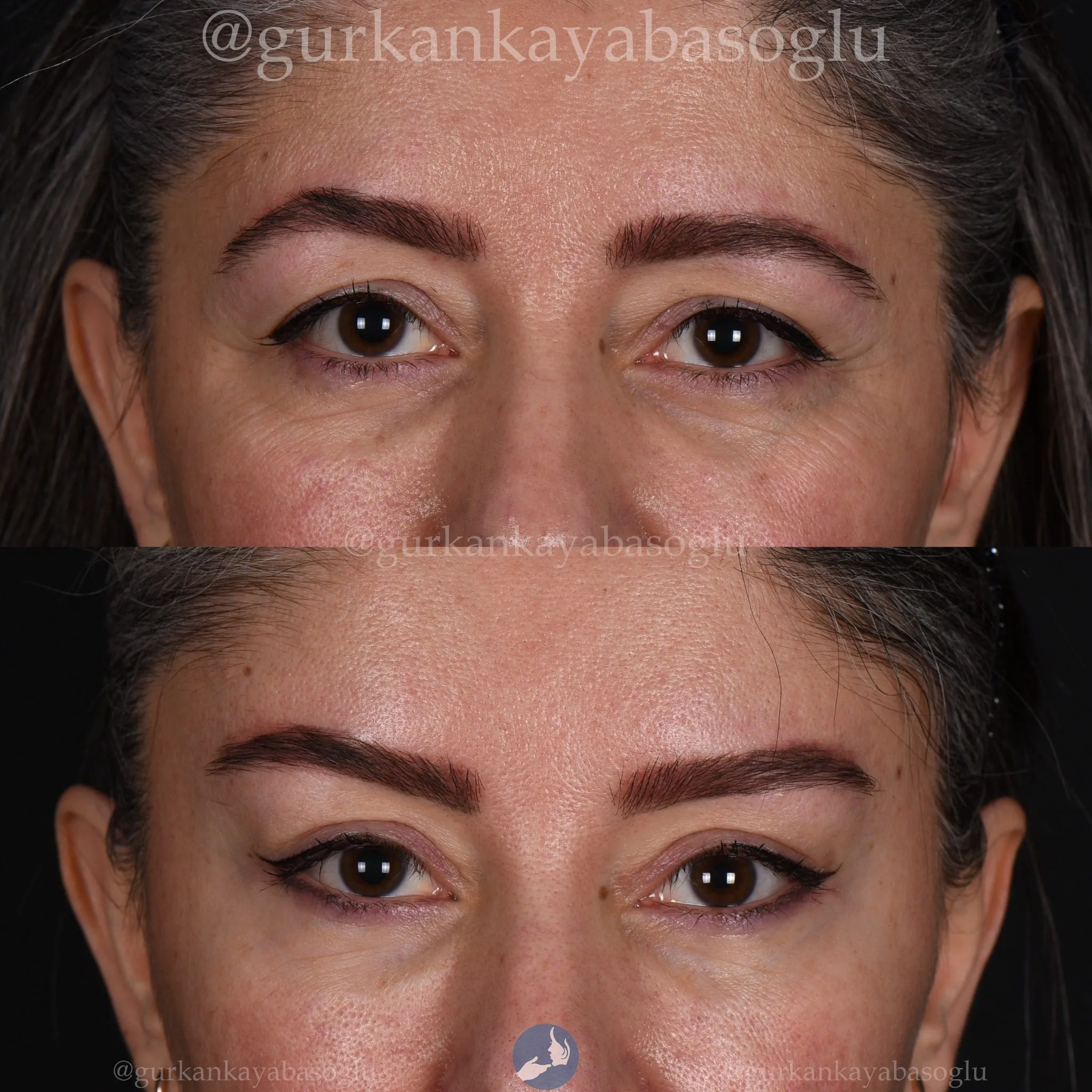
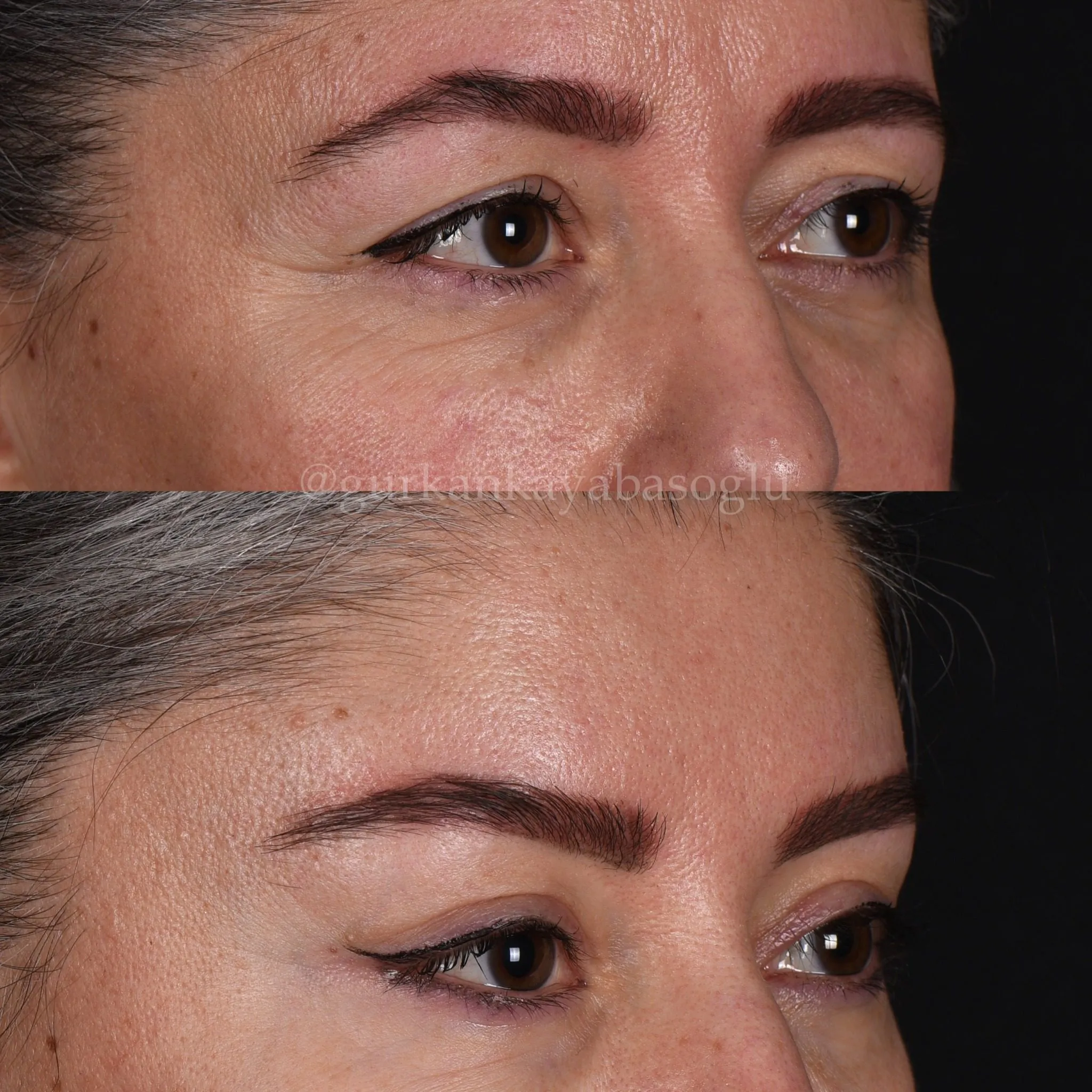
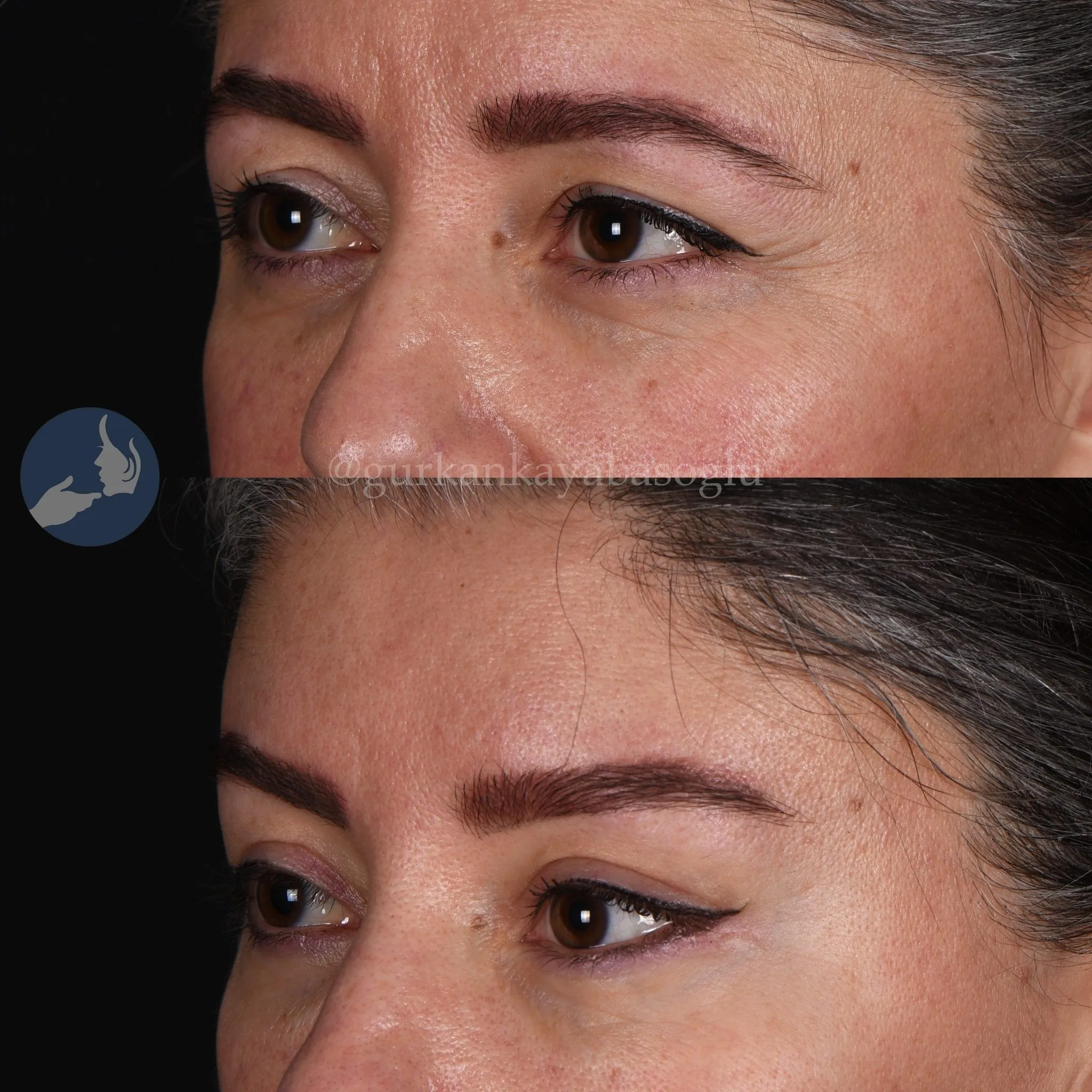
The relationship between the inner and outer corners of the eye determines its visual expression. When the outer corner sags lower than the inner corner, it creates a negative canthal tilt. A temporal lift pulls the outer eye tissues upward and outward, restoring a neutral or slightly positive canthal tilt. This elongates the eye shape and clears away early hooding at the outer upper eyelid.
Smoothing Lateral Orbit Crow’s Feet
By lifting the deep fascial layers beneath the temple skin, the surgeon smooths out lines at the outer corners of the eyes. Because the structural lift takes place in the deeper layers, it softens these expression lines naturally without requiring aggressive skin trimming or creating an over-tightened look.
Periorbital Geometric Vector Matrix
| Anatomical Presentation | Structural Limitation | Surgical Lift Strategy |
|---|---|---|
| Dropped Outer Brow with Eyelid Hooding | The tail of the eyebrow sits below the upper eye rim, pushing loose skin down over the eyelid. | A diagonal temporal lift to raise the outer brow tail, opening up the eyelid crease. |
| Negative Canthal Tilt with Sad Expression | The outer corner of the eye drops lower than the inner corner due to loose tendons. | Combining the temporal lift with a lateral canthopexy to firmly anchor the eye corner to a higher position. |
 Before & after — Fox Eye Surgery
5. The Surgical Journey with Prof. Dr. Gürkan Kayabaşoğlu
Altering the periorbital vectors requires a detailed understanding of three-dimensional facial architecture. In our Istanbul clinic, we plan every fox eye lift to complement the patient’s unique bone structure, prioritizing symmetry, safety, and a natural look.
The Fox Eye Lift Clinical Workflow Steps
- Pre-Operative Vector Design: A comprehensive mapping of brow mobility, eyelid asymmetry, and canthal tilt. The surgical vectors are precisely marked while the patient is upright to ensure balanced results.
- Incision Placement & Deep Dissection: Performed under general anesthesia or deep sedation. The surgeon places small vertical incisions 2 to 3 centimeters inside the hairline, then down-blades to the deep temporal fascia to create a secure, subfascial pathway.
- Fascial Resuspension and Closure: The deep tissues at the outer brow and eye corner are elevated along the planned upward angle and anchored using strong, permanent micro-sutures. The scalp incisions are then meticulously closed, preserving the surrounding hair follicles.
Why Precision in Facial Plastic Skill Controls the Expression Balance
Operating around the eyes requires absolute control over tissue tension; lifting the tissues too high can create a permanently surprised or wide-eyed look, while under-correcting leads to early sagging. Professor Dr. Gürkan Kayabaşoğlu’s specialized focus on facial plastic surgery ensures the deep layers are suspended securely, delivering a refreshed, attractive eye shape that moves naturally when you smile.
| Surgical Specialization Skill | Targeted Application in Fox Eye Surgery |
|---|---|
| Subfascial Dissection Navigation | Operating strictly beneath the superficial temporal fascia, ensuring the motor nerves that raise the eyebrow remain fully protected. |
| Customized Vector Calibration | Adjusting the angle of the lift for each individual eye to correct natural facial asymmetry and deliver a balanced result. |
| Follicular-Sparing Incisions | Angling the surgical blades parallel to the hair roots within the scalp, ensuring normal hair growth continues over the healing site. |
6. Fox Eye Lift Recovery Dynamics & Safe Healing Timeline
Because the structural tension of a fox eye lift is held entirely by the deep fascial anchors, the skin layer heals without strain. This deep suspension method minimizes surface bruising and keeps swelling localized to the temple and outer eye regions during the early healing phase.
Milestone Recovery Timeline
| Timeframe | Anatomical Healing Behavior | Clinical Care Priorities |
|---|---|---|
| Days 1 - 3 | Mild swelling, localized bruising, and a tight sensation develop around the temples and outer eyelids. Asymmetric swelling between the eyes is common and normal. | Apply cold compresses to the outer eye areas intermittently. Keep your head elevated on extra pillows and wear the supportive headband as instructed. |
| Days 7 - 10 | Acute periorbital swelling begins to clear rapidly. The hidden scalp incisions initiate secure primary closure. | Visit the clinic for a professional evaluation of the lift vectors and the comfortable removal of the fine staples or sutures from the hairline. |
| Days 11 - 14 | The almond-shaped eye elongation and lifted brow contour become clearly visible. Normal social and office routines can be safely resumed. | You can stop wearing the supportive headband during the day. Light makeup may be gently applied to cover any faint, residual shadows near the eyes. |
| Weeks 3 - 4 | The deep fascial anchors achieve strong structural bond. The tight sensation when blinking or opening the eyes wide completely fades away. | Gradually resume light physical exercises and jogging. Avoid any direct friction, intense rubbing, or pressure on the temple regions. |
| Months 2 - 3 | The hair-bearing incisions fade into faint, flat lines that match the natural scalp tone. The eyes adjust fully to their new, refreshed position. | Normal hair growth continues over the healed sites. Enjoy the final, beautifully balanced upward tilt of the periorbital frame. |
Post-Operative Care Protocols for Invisible Hairline Scar Maturation
Dos:
- Keep the supportive medical headband positioned correctly to compress the temple tissues and limit fluid accumulation.
- Wash your hair very gently after the first 48 hours using a mild shampoo, taking extra care not to scratch near the staples.
- Sleep exclusively on your back with your head elevated to ensure symmetric fluid drainage from both sides of the face.
Don’ts:
- Do not rub your eyes or pull outward on the eyelids when removing makeup or washing your face during the first month.
- Do not use high-heat hair dryers or chemical dyes directly over the incision sites until they are fully healed and cleared by the clinic.
- Do not sleep on your side or rest the weight of your face against a pillow, as this can apply uneven force to the internal fascial sutures.
 Before & after — Fox Eye Surgery
7. Cost & Logistics Analysis: Istanbul, Turkey
A surgical fox eye lift requires specialized subfascial instruments and an accredited hospital setting to guarantee complete safety. While the technical nature of deep fascial anchoring influences surgical fees, undergoing a temporal lift in Istanbul, Turkey, offers an excellent balance of expert care and highly optimized all-inclusive pricing.
Factors Influencing Fox Eye Lift Pricing
- Combined Eyelid Enhancements: Combining a temporal lift with an upper blepharoplasty to remove heavy skin folds updates the overall operating room time and anesthesia fees.
- Fixation Method: The choice between permanent micro-sutures or specialized deep anchoring systems to secure the tissue matrix can affect structural material costs.
- Anesthesia Setup: Performing the procedure under deep intravenous sedation or full general anesthesia inside an accredited clinic changes base hospital fees.
Global Price Comparison Grid
| Country / Region | Estimated Average Cost Range | Logistical Package Benefits |
|---|---|---|
| Istanbul, Turkey | €4,050 – €6,500 | All-inclusive care: Expert surgeon fees, accredited clinical facility use, anesthesia, premium hotel stay, and all private airport-clinic ground transfers. |
| United States (USA) | €14,200 – €22,800 | Surgeon fees are typically quoted alone; operating theater use, material supplies, and follow-up checks often incur extra charges. |
| United Kingdom (UK) | €12,200 – €19,500 | High private facility costs mean that even limited-incision endoscopic procedures carry substantial base rates. |
| Canada | €11,300 – €18,200 | Cosmetic facial surgery is outside public health coverage; surgeon, operating facility and anaesthesia are billed separately, and travel or accommodation is never part of the quote. |
| Australia | €13,000 – €20,800 | Medicare does not fund cosmetic indications; high theatre and anaesthetist charges sit on top of the surgeon’s quote, with no transfer or accommodation support. |
Travel and Healing Logistics for International Patients
Even though a surgical temporal lift features a localized recovery path, ensuring primary tissue stability before flying home is key. International patients should plan a stay of 6 to 8 days in Istanbul. This window allows the early periorbital swelling to stabilize, allows for direct evaluation of the lift vectors, and ensures all fine staples or sutures are safely removed from the hairline before your flight back.
8. Prof. Dr. Gürkan Kayabaşoğlu’s Fox Eye Philosophy
A successful fox eye surgery should never result in an exaggerated, perpetually surprised, or artificially pulled appearance. Rejuvenating and shaping the periorbital frame requires a deep respect for natural facial geometry, ensuring that the new upward vectors enhance your gaze while blending seamlessly with your overall expressions.
The Pillars of Our Periorbital Rejuvenation Approach
- Expression Harmonization over Aggressive Pulling: The ultimate goal is to achieve an attractive, almond-shaped eye contour without distorting the surrounding structures. By avoiding excessive skin tension, the results look soft and natural when you talk, smile, or laugh.
- Structural Balance of the Brow and Orbit: The eyebrow and the outer corner of the eye do not exist in isolation. Our technique focuses on lifting the deep fascial layers as a single, coordinated unit, preserving a balanced and youthfully refreshed relationship between the brow tail and the eyelids.
- Customized Vector Calibration: No two faces share the exact same bone structure or degree of tissue laxity. We precisely tailor the angle and height of each lift to match your unique orbital anatomy, correcting pre-existing asymmetries while maintaining complete facial authenticity.
Fox Eye Lift Surgical Application Matrix
| Structural Goal | Anatomical Challenge | Dr. Kayabaşoğlu’s Structural Solution |
|---|---|---|
| Almond-Shaped Eye Elongation | A heavy, flat, or downward-sloping outer corner that obscures the upper eyelid crease. | Precise elevation of the deep tissue plane to transition a negative canthal tilt into a balanced, positive angle. |
| Lateral Brow Elevation | A dropped or sagging eyebrow tail that creates a tired, hooded look over the eyes. | Securing the subfascial envelope directly to the dense deep temporal fascia, achieving a stable, long-term arch. |
| Discrete Scar Concealment | Avoiding any visible signs of structural modification or fine lines around the periorbital zone. | Placing small vertical entries deep inside the hair-bearing scalp, ensuring the healing lines are completely hidden. |
9. Frequently Asked Questions (FAQ Matrix)
This comprehensive question-and-answer framework clarifies the anatomical, technical, and recovery details of advanced Fox Eye surgery and deep fascial temporal lifts.
Are the structural results of a surgical fox eye lift permanent?
Unlike temporary thread lifts that fail within months, a surgical temporal lift repositions the deep fascial layers and anchors them directly to the dense temporal structures. This creates a highly stable result that typically lasts 8 to 10 years. While natural, long-term aging continues across the entire face, your outer brow and eye vectors will always remain higher than they would have been without the surgery.
Is there a risk of permanent hair loss or thinning at the incision sites?
Temporary hair shedding right around the incision line—known as surgical shock loss—can occasionally occur due to localized tissue swelling and changes in microcirculation. To prevent this, the incision blades are angled parallel to the hair roots during surgery to protect the hair follicles. Normal hair growth typically resumes completely within 3 to 4 months as the healing process settles.
How does a temporal lift protect the nerve that controls eyebrow movement?
The temporal branch of the facial nerve runs within the shallow, superficial temporal fascia layer to control brow movement. Complete nerve safety is achieved by operating strictly in the deeper subfascial plane, directly on top of the deep temporal muscle fascia. Navigating below the nerve pathway keeps it fully protected, ensuring normal, natural facial expressions.
What is the difference between a canthopexy and a canthoplasty during this surgery?
A canthopexy stabilizes and reinforces the existing outer eye tendon using internal sutures to support the lift without cutting the tissue. A canthoplasty is used when structural changes are needed; it involves dividing, shortening, and completely repositioning the lateral canthal tendon to structurally alter a downward eye slant. Both techniques can be used to achieve the desired almond shape.
Can a fox eye lift be performed under local anesthesia with sedation?
Yes. When performed as an isolated procedure, a temporal lift can be comfortably completed under local anesthesia combined with deep intravenous sedation. This ensures a completely pain-free experience and allows for a smooth, rapid transition through the immediate recovery window, avoiding the grogginess associated with general anesthesia.
Will this procedure fix heavy skin sagging on the upper eyelids?
A temporal lift provides excellent correction for a dropped outer brow tail and light hooding at the outer corner of the eye. However, if you have significant, heavy skin sagging across the entire upper eyelid, combining the fox eye lift with a targeted upper blepharoplasty (eyelid lift) will deliver a more balanced and refreshed result.